Tamron 17 70
Capture every moment with precision and clarity using the Tamron 17 70. Ideal for photography enthusiasts and professionals alike, this versatile lens range offers flexibility for a variety of shooting scenarios. Whether you're looking to enhance your travel photos, portraits, or everyday snapshots, the Tamron 17 70 provides an impressive combination of performance and convenience. Explore options that help bring your creative vision to life and find the perfect fit for your camera setup.
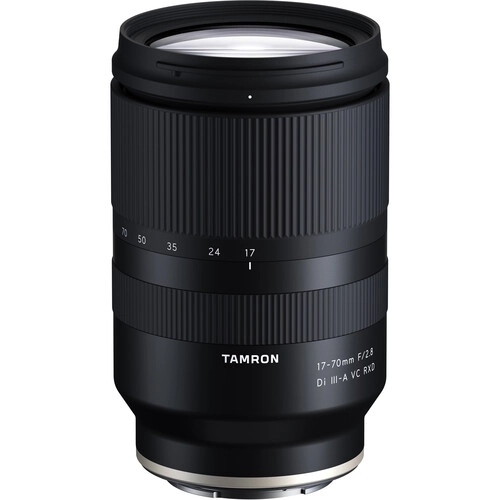
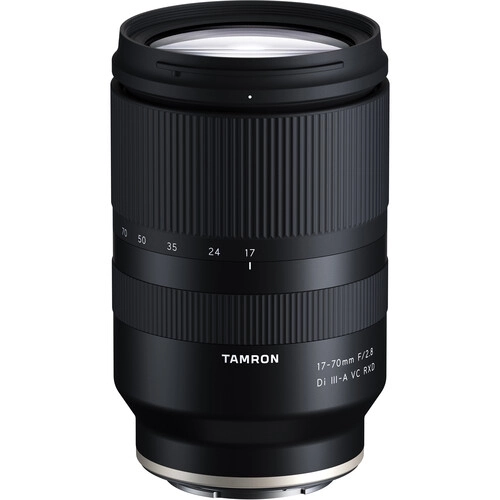
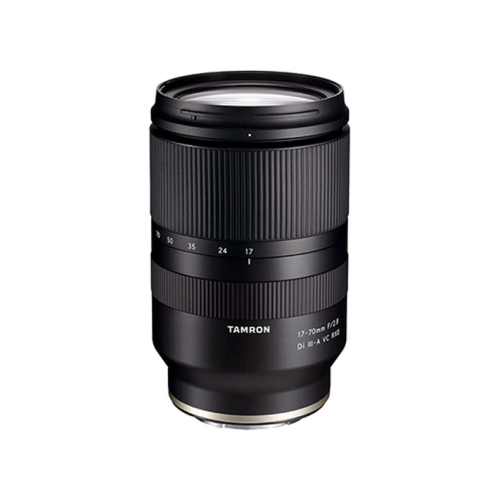
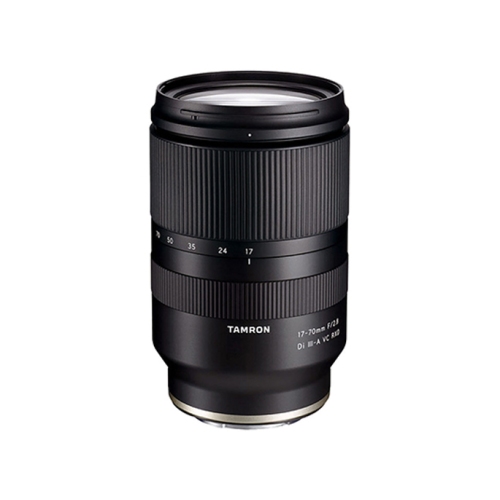
Everyday APS-C shooting with constant aperture and stabilization
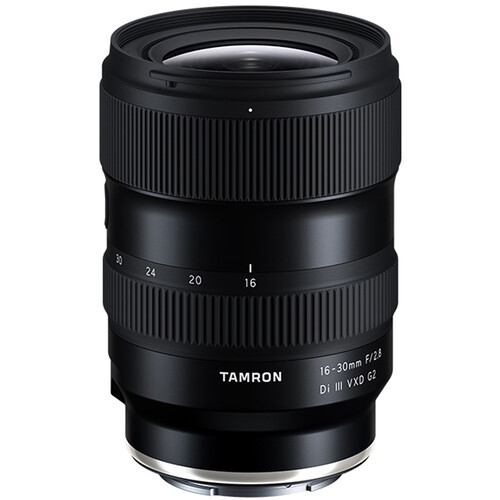
A 17–70mm standard zoom lens is a practical choice for photographers and videographers who want one versatile lens for everyday shooting. Designed for compatible APS-C mirrorless camera systems, this focal-length range covers the perspectives most often used in real-world photography, from wider scenes at 17mm to more tightly framed subjects at 70mm. At the wide end, it can capture sweeping landscapes, city streets, interiors, group photographs, and travel scenes where there is limited room to step back. Zooming toward the telephoto end makes it easier to isolate a person in a portrait, pick out architectural details, or photograph a subject from a comfortable distance. On an APS-C camera, the field of view is roughly equivalent to 25.5–105mm on a full-frame system, giving the lens a useful blend of wide-angle coverage and short-telephoto reach. This makes it well suited to a camera bag that needs to stay compact without giving up flexibility. It can serve as an everyday walk-around lens for family moments, weekend outings, food photography, school events, and casual video, while also offering enough reach for details that are just beyond arm’s length. During the cooler months, it can be especially convenient for photographing indoor gatherings, seasonal displays, and bright outdoor scenes without needing to change lenses repeatedly in cold or windy conditions.
One of the defining features to look for in this class of lens is a constant f/2.8 maximum aperture. Because the aperture remains available across the zoom range, exposure and depth-of-field control stay more consistent as the composition changes. A wider aperture can help create a softly blurred background behind a portrait, separate a subject from a busy street, or gather more light for indoor photographs and video. It is also useful when the light begins to fade during an evening walk or when a room is illuminated by windows and practical lamps rather than strong overhead lighting. Optical image stabilization, often described as vibration compensation, can help reduce the effect of small movements while shooting handheld. This is valuable for still images made at slower shutter speeds and for steadier-looking video, particularly when the camera body does not include built-in stabilization. Some systems also use stabilization technologies designed to support video recording, helping when filming travel clips, family activities, demonstrations, or moving through a venue. Autofocus performance is another important consideration. A quiet, responsive focusing motor can make it easier to follow a child running across a park, capture an unplanned expression, or record spoken footage without distracting operating noise. A minimum focusing distance of approximately 0.19 metre at the wide end and about 0.39 metre at the telephoto end can add creative flexibility for close-up details, small objects, tabletop scenes, and food. A 67mm filter thread is also useful for shoppers who already own compatible protective, polarizing, or neutral-density filters, although the exact fit and accessories should always be confirmed before purchase.
When choosing a 17–70mm lens, start by checking the camera mount and sensor format carefully, since lenses are not universally interchangeable even when their focal lengths appear similar. Confirm that the lens is made for the camera’s mount and that autofocus, image stabilization, aperture control, and electronic communication will work as expected. Size and weight matter as well: a lens in this category may weigh approximately 525–540 grams, depending on the mount, which is manageable for many photographers but worth considering for long walks, travel, or smaller camera bodies. Think about how the lens will be used most often. A traveller may value the ability to move from a wide streetscape to a distant architectural detail without changing lenses, while a parent may appreciate having a single setup ready for unpredictable moments at home or outdoors. For portrait sessions, the longer end can provide flattering framing and comfortable working distance; for video creators, the constant aperture and stabilization can make changes in framing feel more controlled. It can also be a thoughtful gift for someone moving beyond a basic kit lens, learning portrait photography, documenting local adventures, or building a practical mirrorless setup. Shoppers comparing compatible options for another camera system can also explore Tamron Lenses for Canon, while remembering that mount compatibility remains the first check. Before adding a lens to a camera bag, review the mount, sensor compatibility, autofocus support, stabilization features, minimum focus distance, filter size, and included accessories. These details help ensure the lens feels natural in everyday use, whether it is carried through bright autumn landscapes, used indoors during shorter days, or kept ready for spontaneous photographs and video throughout the cooler season.
One of the defining features to look for in this class of lens is a constant f/2.8 maximum aperture. Because the aperture remains available across the zoom range, exposure and depth-of-field control stay more consistent as the composition changes. A wider aperture can help create a softly blurred background behind a portrait, separate a subject from a busy street, or gather more light for indoor photographs and video. It is also useful when the light begins to fade during an evening walk or when a room is illuminated by windows and practical lamps rather than strong overhead lighting. Optical image stabilization, often described as vibration compensation, can help reduce the effect of small movements while shooting handheld. This is valuable for still images made at slower shutter speeds and for steadier-looking video, particularly when the camera body does not include built-in stabilization. Some systems also use stabilization technologies designed to support video recording, helping when filming travel clips, family activities, demonstrations, or moving through a venue. Autofocus performance is another important consideration. A quiet, responsive focusing motor can make it easier to follow a child running across a park, capture an unplanned expression, or record spoken footage without distracting operating noise. A minimum focusing distance of approximately 0.19 metre at the wide end and about 0.39 metre at the telephoto end can add creative flexibility for close-up details, small objects, tabletop scenes, and food. A 67mm filter thread is also useful for shoppers who already own compatible protective, polarizing, or neutral-density filters, although the exact fit and accessories should always be confirmed before purchase.
When choosing a 17–70mm lens, start by checking the camera mount and sensor format carefully, since lenses are not universally interchangeable even when their focal lengths appear similar. Confirm that the lens is made for the camera’s mount and that autofocus, image stabilization, aperture control, and electronic communication will work as expected. Size and weight matter as well: a lens in this category may weigh approximately 525–540 grams, depending on the mount, which is manageable for many photographers but worth considering for long walks, travel, or smaller camera bodies. Think about how the lens will be used most often. A traveller may value the ability to move from a wide streetscape to a distant architectural detail without changing lenses, while a parent may appreciate having a single setup ready for unpredictable moments at home or outdoors. For portrait sessions, the longer end can provide flattering framing and comfortable working distance; for video creators, the constant aperture and stabilization can make changes in framing feel more controlled. It can also be a thoughtful gift for someone moving beyond a basic kit lens, learning portrait photography, documenting local adventures, or building a practical mirrorless setup. Shoppers comparing compatible options for another camera system can also explore Tamron Lenses for Canon, while remembering that mount compatibility remains the first check. Before adding a lens to a camera bag, review the mount, sensor compatibility, autofocus support, stabilization features, minimum focus distance, filter size, and included accessories. These details help ensure the lens feels natural in everyday use, whether it is carried through bright autumn landscapes, used indoors during shorter days, or kept ready for spontaneous photographs and video throughout the cooler season.
Top selling and popular products
-
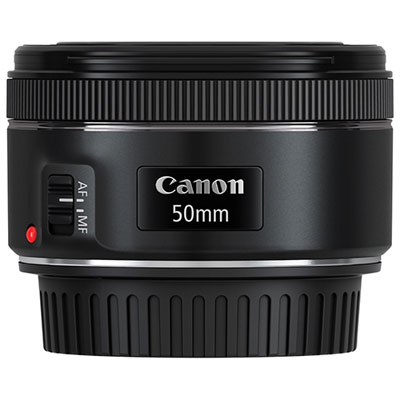 Your price for this item is $169.99
 -
 Your price for this item is $329.99
 -
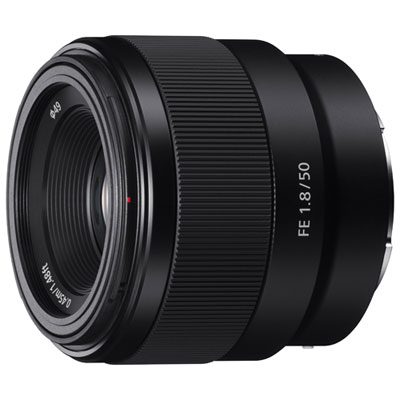 Your price for this item is $349.99
 -
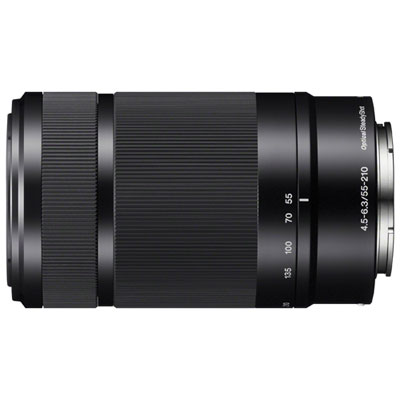 Your price for this item is $399.99
 -
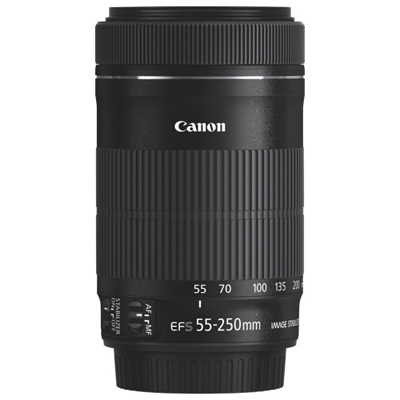 Your price for this item is $399.99
 -
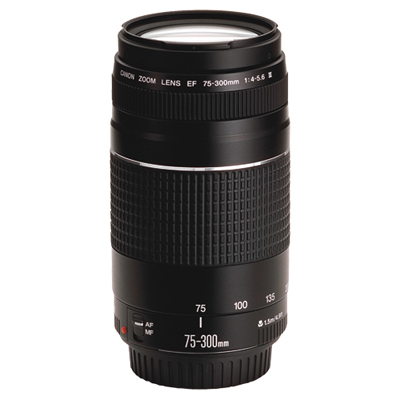 Your price for this item is $199.99
 -
 Your price for this item is $174.99
 -
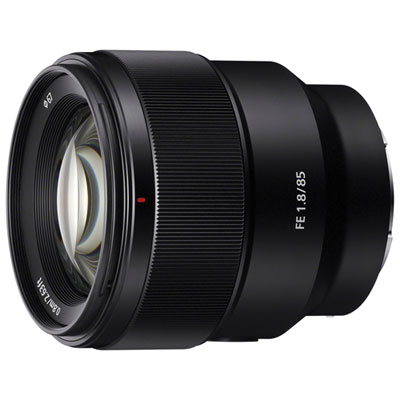 Your price for this item is $749.99
Discover more categories related to Tamron 17 70
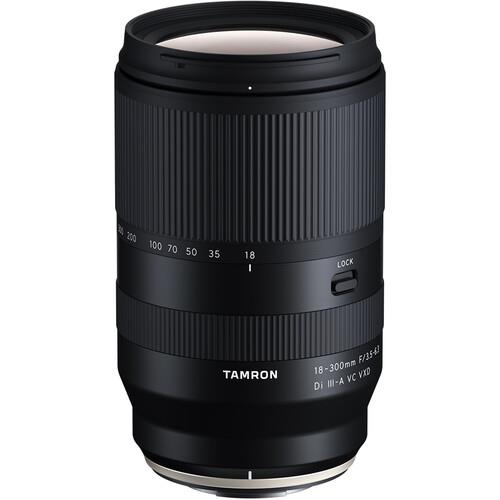

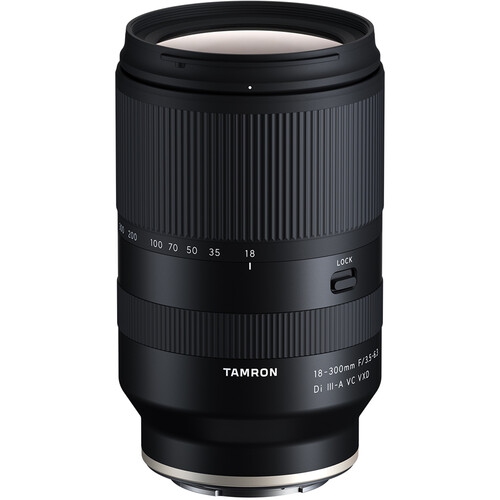
Top Collections:
Pokemon Centers, Kindle Devices, Best Budget Office Chairs, Apple iPhones 16, Best Laptops for Writers, iPhone 15 Apple, Canon G7X Cameras, Refurbished Apple Laptops, Alarm Clock, Motorola Razr Phones
Some products may be subject to Environmental Handling Fees
(EHF) depending on your province.
Learn more about EHFs.