Shielded RJ45 Connectors
Looking to enhance the performance and reliability of your network connections? Look no further than our selection of shielded RJ45 connectors. These connectors are designed to provide superior protection against electromagnetic interference, ensuring a stable and uninterrupted connection for all your networking needs. Whether you're setting up a home office, expanding your business network, or simply looking to upgrade your existing setup, our range of shielded RJ45 connectors offers the perfect solution. Explore our collection today and take your network connectivity to the next level.
Sort
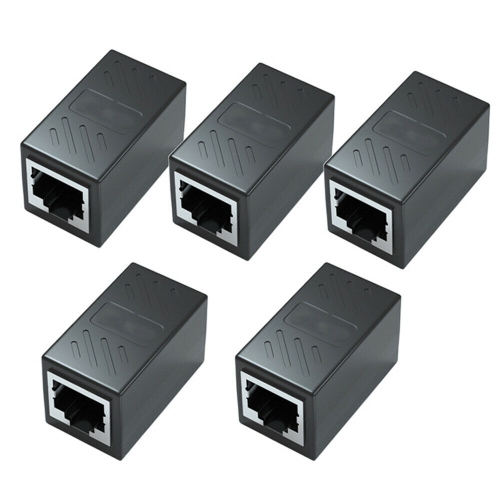
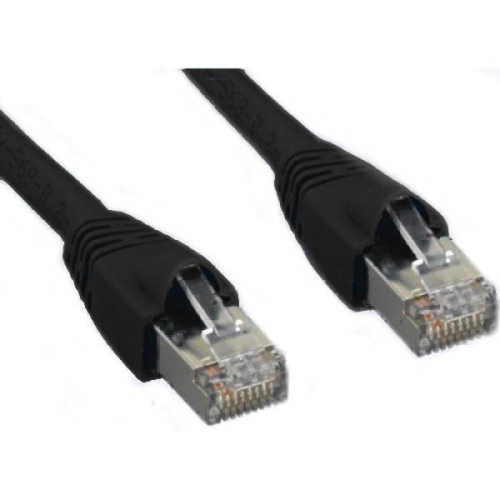
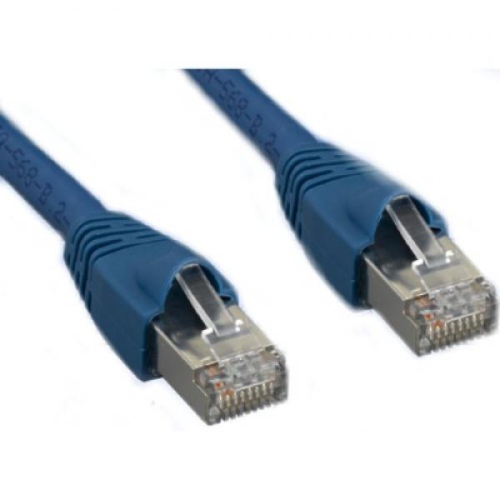
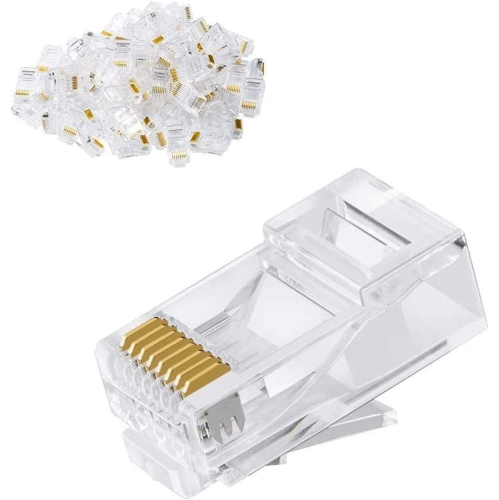
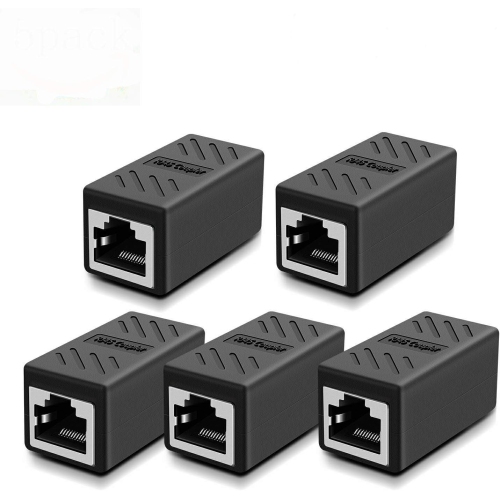
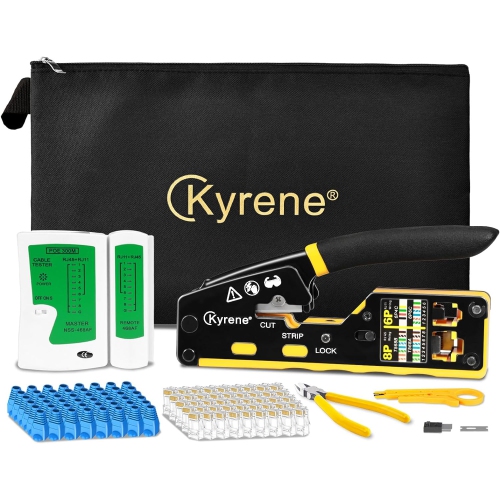
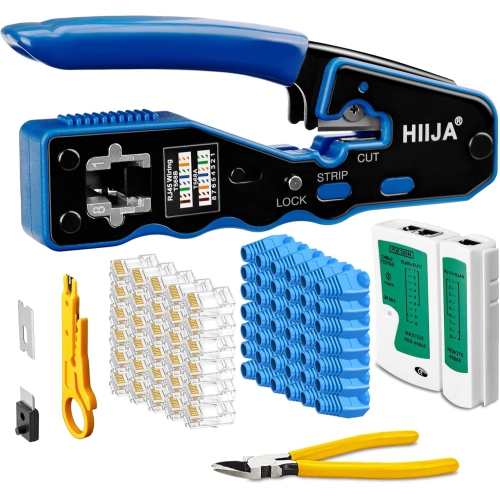
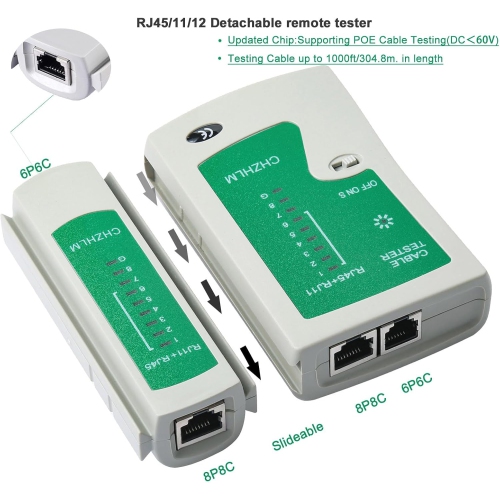
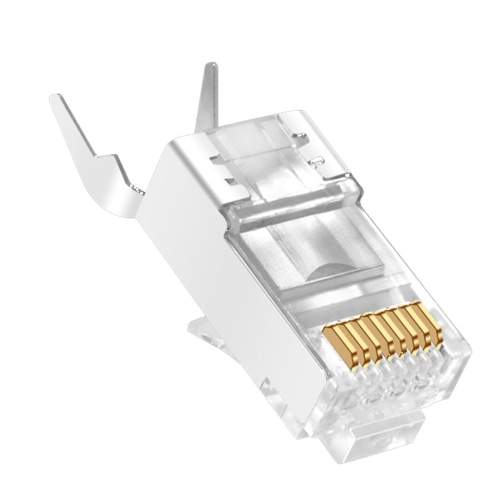
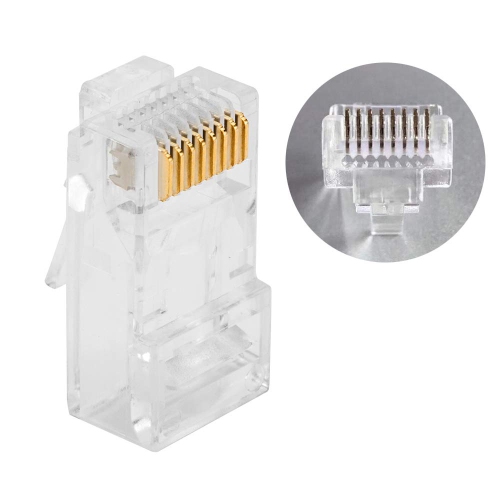
Shielding continuity depends on the complete Ethernet connection
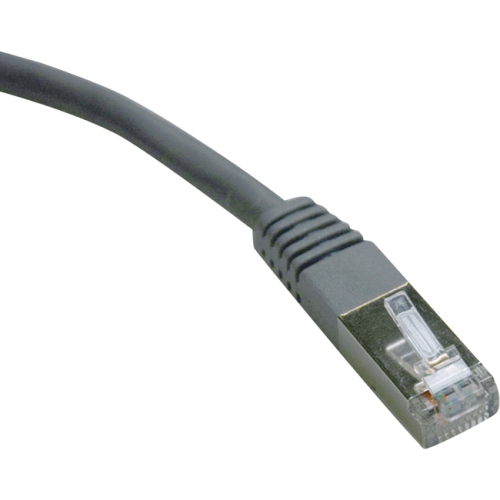
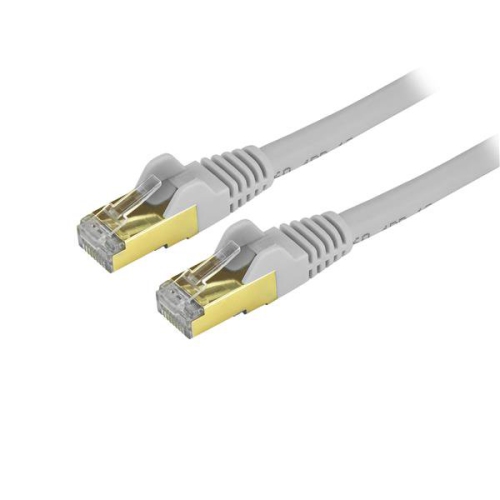
Shielded RJ45 connectors are designed for Ethernet installations where protection against electrical interference matters. Unlike unshielded connectors, these plugs feature a metallic outer housing that helps surround the terminated cable and maintain a conductive path to grounded network equipment. That additional shielding can help reduce the effect of electromagnetic interference (EMI) and radio frequency interference (RFI) from sources such as power cables, motors, fluorescent lighting, wireless equipment, and other electronics. They are commonly used with shielded twisted-pair Ethernet cables, including STP, FTP, F/UTP, and other cable constructions that include a foil layer, braid, or drain wire. A shielded connector is most effective when the entire network channel is designed for shielding: the cable, connector, patch panel, keystone jack, patch cord, and network port should all be compatible, with proper grounding and bonding throughout the connection. Using shielded connectors on an otherwise unshielded installation may not provide the expected benefit, so it is important to consider the complete cabling path before beginning a project. These connectors can be useful in home offices, workshops, server rooms, security camera installations, smart-home wiring projects, and commercial environments where Ethernet cables run near electrical circuits or equipment that may generate interference. They can also be a practical addition to a networking toolkit for technicians, installers, and confident do-it-yourself users who need to repair a cable, create a custom-length connection, or finish a new wall-to-wall network run. For compatible cable options, [Shielded Cat6 Cables] can be considered alongside the appropriate connectors and termination tools.
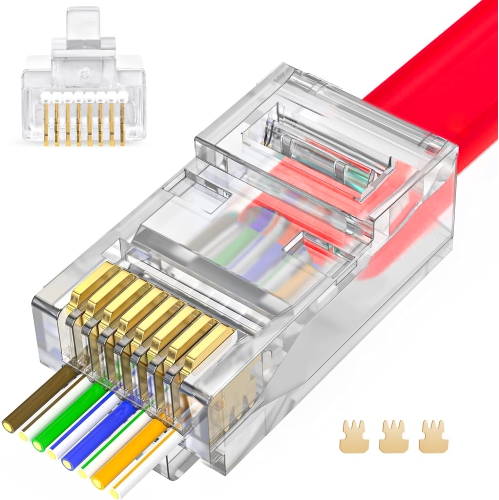
Before choosing shielded RJ45 connectors, match them carefully to the Ethernet cable being terminated. Cable category is one of the most important details: a Cat5e connector may not be suited to a thicker Cat6 or Cat6A cable, while higher-category cables often have larger conductors, a central spline, thicker insulation, or a larger outer jacket. The connector should support the performance category of the cable and fit its physical dimensions without forcing the conductors into place. Also check whether the cable uses solid or stranded conductors. Solid-core cable is generally used for permanent in-wall runs and may require connectors designed for solid conductors, while stranded cable is more flexible and is often used for patch cords or connections that are moved regularly. Shielded plugs may include internal grounding tabs, a metal load bar, a cable clamp, or a housing designed to contact the foil shield and drain wire. These details help preserve shielding continuity from the cable through the connector and into the grounded port. Pass-through designs allow the individual wires to extend through the front of the plug before crimping, making it easier to inspect the colour sequence and confirm that all conductors have reached the end of the connector. Standard designs keep the wire ends inside the plug and can offer a neat finish when used with the correct preparation technique. Consider connector compatibility with the wire gauge, insulation diameter, conductor construction, and intended crimping method. A shielded RJ45 connector is not a universal fit for every Ethernet cable, and the correct match can make the difference between a secure termination and a frustrating installation with intermittent connectivity.
Proper preparation is essential because the metal shell only works as intended when it makes reliable contact with the cable’s shielding and the grounded network hardware. Start by removing only enough outer jacket to arrange the conductors without exposing more cable than necessary. Depending on the cable design, the foil shield may need to be folded back over the jacket, while the drain wire is positioned so it contacts the connector’s grounding feature. Follow the connector manufacturer’s instructions for the exact arrangement, as grounding tabs and shield contacts vary between designs. Keep the twisted pairs intact as close to the plug as possible to help preserve signal performance, and arrange the conductors according to the standard used at the other end of the cable, such as the common T568A or T568B wiring pattern. Before crimping, inspect the plug from the front and side to confirm that each conductor is in the correct position, reaches the end of the connector, and remains in the intended order. After crimping, check that the strain relief grips the outer jacket rather than the individual wires and that the metal housing is firmly attached without sharp edges or looseness. A cable tester can verify conductor continuity and identify crossed, open, or shorted pairs, while a suitable shield-continuity check can help confirm that the connector’s metal shell, cable shield, and grounded patch panel or switch port form a complete electrical path. This extra inspection is particularly valuable for long runs, ceiling installations, security systems, and network connections that are difficult to access once furniture, walls, or equipment are in place. Shielded RJ45 connectors are a practical choice for careful Ethernet work, whether the goal is a cleaner custom installation, a dependable repair, or a network prepared to handle challenging electrical surroundings.
Before choosing shielded RJ45 connectors, match them carefully to the Ethernet cable being terminated. Cable category is one of the most important details: a Cat5e connector may not be suited to a thicker Cat6 or Cat6A cable, while higher-category cables often have larger conductors, a central spline, thicker insulation, or a larger outer jacket. The connector should support the performance category of the cable and fit its physical dimensions without forcing the conductors into place. Also check whether the cable uses solid or stranded conductors. Solid-core cable is generally used for permanent in-wall runs and may require connectors designed for solid conductors, while stranded cable is more flexible and is often used for patch cords or connections that are moved regularly. Shielded plugs may include internal grounding tabs, a metal load bar, a cable clamp, or a housing designed to contact the foil shield and drain wire. These details help preserve shielding continuity from the cable through the connector and into the grounded port. Pass-through designs allow the individual wires to extend through the front of the plug before crimping, making it easier to inspect the colour sequence and confirm that all conductors have reached the end of the connector. Standard designs keep the wire ends inside the plug and can offer a neat finish when used with the correct preparation technique. Consider connector compatibility with the wire gauge, insulation diameter, conductor construction, and intended crimping method. A shielded RJ45 connector is not a universal fit for every Ethernet cable, and the correct match can make the difference between a secure termination and a frustrating installation with intermittent connectivity.
Proper preparation is essential because the metal shell only works as intended when it makes reliable contact with the cable’s shielding and the grounded network hardware. Start by removing only enough outer jacket to arrange the conductors without exposing more cable than necessary. Depending on the cable design, the foil shield may need to be folded back over the jacket, while the drain wire is positioned so it contacts the connector’s grounding feature. Follow the connector manufacturer’s instructions for the exact arrangement, as grounding tabs and shield contacts vary between designs. Keep the twisted pairs intact as close to the plug as possible to help preserve signal performance, and arrange the conductors according to the standard used at the other end of the cable, such as the common T568A or T568B wiring pattern. Before crimping, inspect the plug from the front and side to confirm that each conductor is in the correct position, reaches the end of the connector, and remains in the intended order. After crimping, check that the strain relief grips the outer jacket rather than the individual wires and that the metal housing is firmly attached without sharp edges or looseness. A cable tester can verify conductor continuity and identify crossed, open, or shorted pairs, while a suitable shield-continuity check can help confirm that the connector’s metal shell, cable shield, and grounded patch panel or switch port form a complete electrical path. This extra inspection is particularly valuable for long runs, ceiling installations, security systems, and network connections that are difficult to access once furniture, walls, or equipment are in place. Shielded RJ45 connectors are a practical choice for careful Ethernet work, whether the goal is a cleaner custom installation, a dependable repair, or a network prepared to handle challenging electrical surroundings.
Top selling and popular products
-
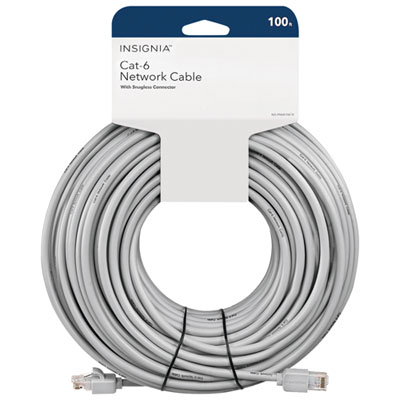 Your price for this item is $49.95
 -
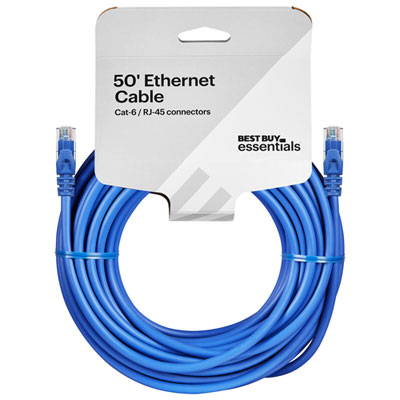 Your price for this item is $24.99
 -
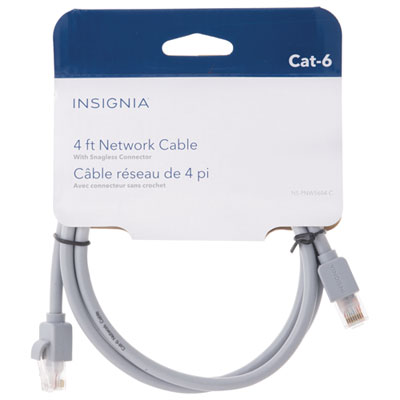 Your price for this item is $24.97
 -
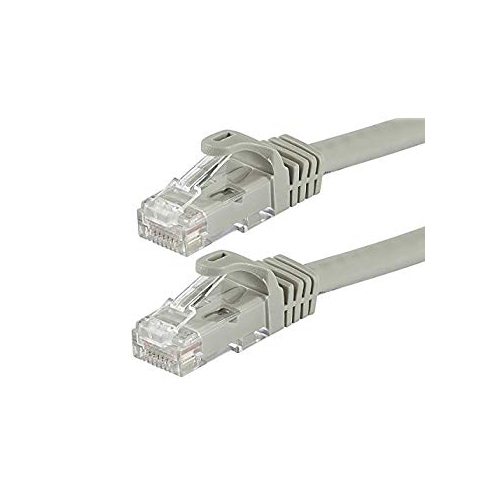 Your price for this item is $20.89
 -
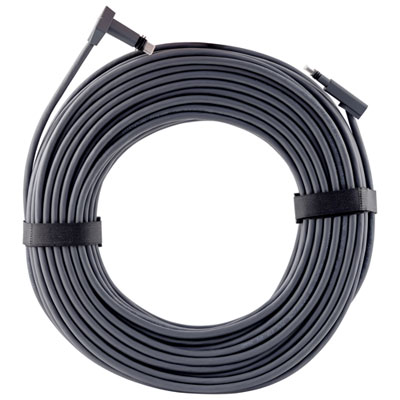 Your price for this item is $164.99
 -
 Your price for this item is $11.68
 -
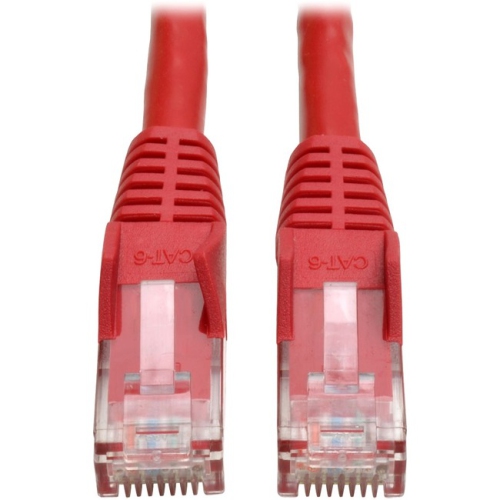 Your price for this item is $67.68
 -
 Your price for this item is $67.37
Discover more categories related to Shielded RJ45 Connectors
Top Collections:
Pokemon Centers, Best Camera Tripods Under $100, Vlogging Cameras for Beginners, Kindle Devices, Best Electric Toothbrushes Under $100, Portable Solar Power Stations for Emergency, Best Wrist Fitness Trackers, Samsung Z Fold, Back To School Wireless Presentation Clickers, Canon G7X Cameras
Some products may be subject to Environmental Handling Fees
(EHF) depending on your province.
Learn more about EHFs.