Akai Mpk Mini Midi Controllers
Unleash your creativity and elevate your music production with a versatile MIDI controller designed to meet the needs of both beginners and seasoned producers. Compact yet powerful, this tool offers seamless integration with your digital audio workstation, allowing you to craft beats, melodies, and harmonies with precision. Its intuitive layout and responsive controls make it easy to experiment with new sounds and refine your compositions. Whether you're in the studio or on the go, this MIDI controller is your gateway to endless musical possibilities. Explore its features today and take your musical journey to the next level.
Sort
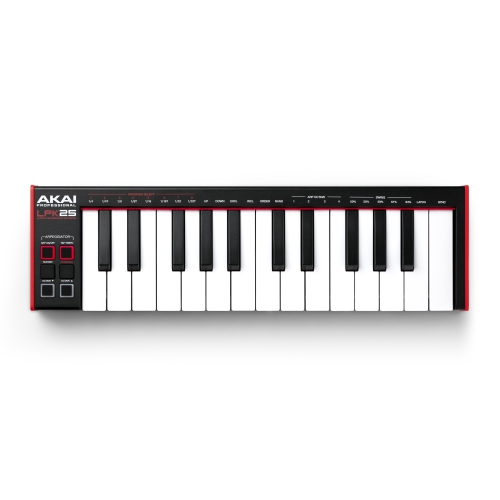
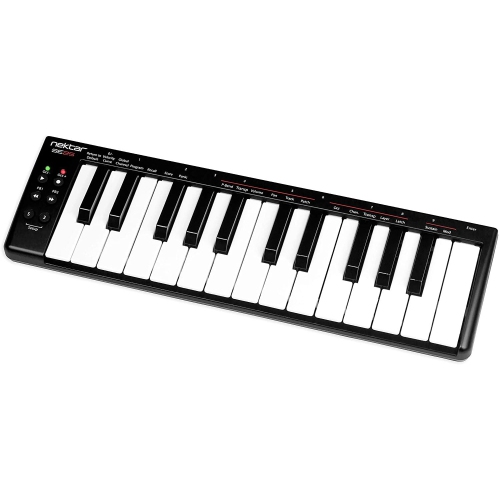
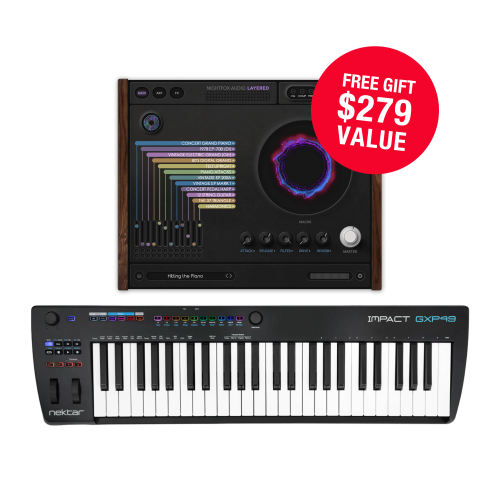
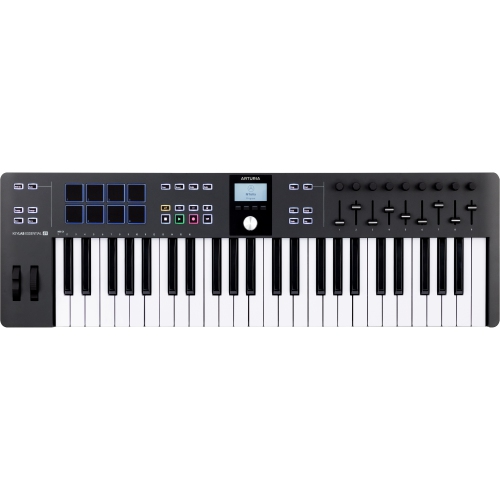
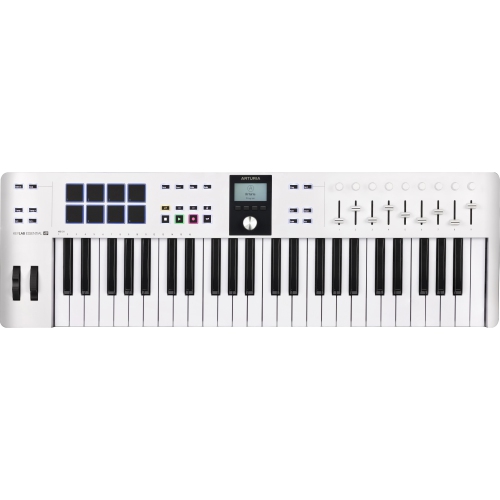
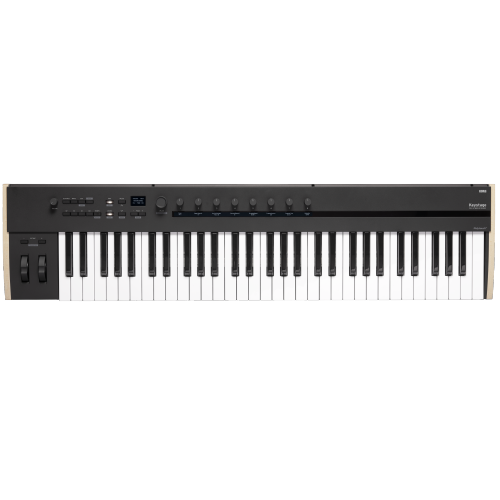
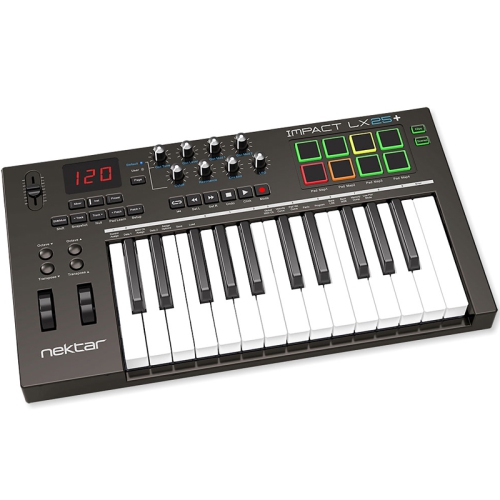
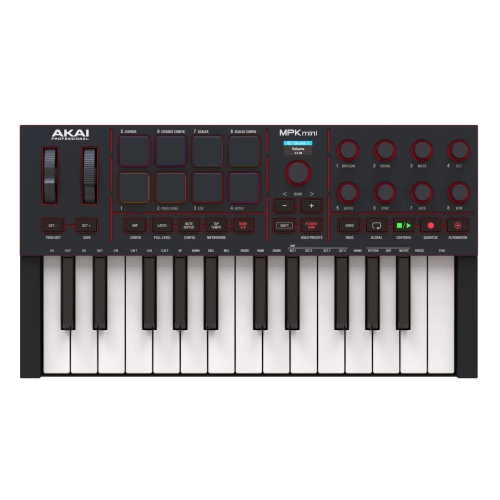
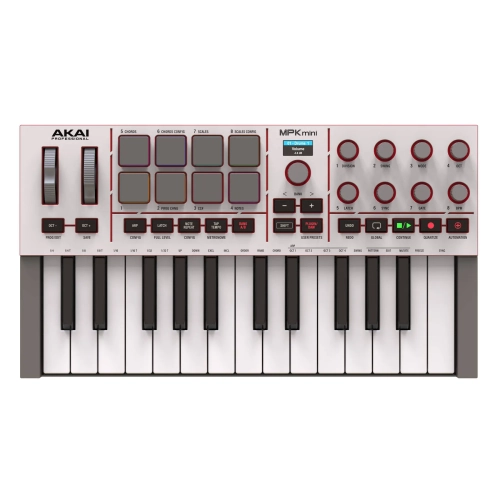
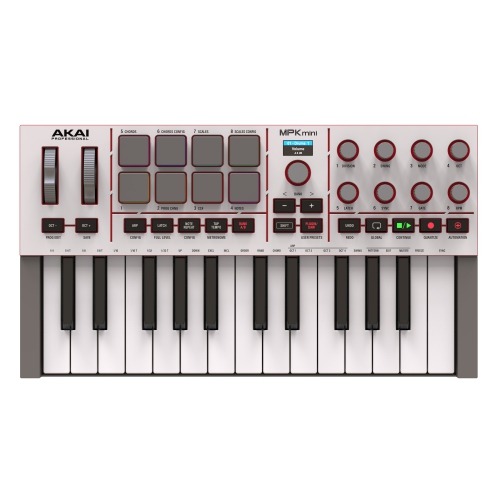
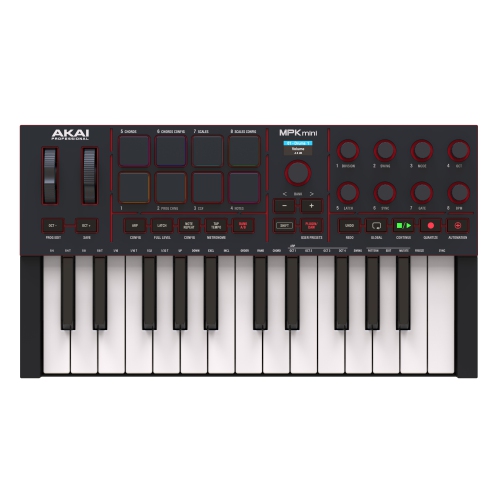
Compact control for expressive music making anywhere
MIDI keyboard controllers bring hands-on expression to computer-based music making without taking up the space of a full-size piano. Compact models in this category are especially well suited to beat-making, songwriting, arranging, DJ preparation, and mobile music production, with many featuring 25 to 37 velocity-sensitive mini-keys that respond to how softly or firmly they are played. The smaller keyboard range makes it easier to fit a controller beside a laptop, on a narrow desk, or in a shared creative space, while still providing enough notes for melodies, bass lines, chords, and simple two-handed parts. They do not usually produce sound on their own; instead, they send MIDI information to compatible music software, virtual instruments, and digital audio workstations (DAWs). This allows one compact controller to play piano, electric piano, synthesizer, strings, drums, and many other sounds through the connected computer or mobile setup. For someone building a first home studio, a compact MIDI controller can make software feel more immediate and musical. Rather than drawing every note with a mouse, a player can tap out a rhythm, try a chord progression, or adjust a filter with a physical control. For experienced musicians, the same format can act as a portable sketchpad for capturing ideas before they disappear. It can travel easily between a bedroom studio, classroom, rehearsal space, or cottage, making it practical during the warmer season and equally useful for indoor creative sessions during the cooler months. These controllers are also thoughtful gifts for music students, aspiring producers, singers who write their own material, and anyone curious about turning a laptop into a flexible recording environment. When choosing among options, consider the available workspace, the preferred playing style, and whether portability is more important than a larger key range. A 25-key layout is convenient for quick melodies and beats, while a 37-key layout offers more room for chord voicings and bass lines without becoming as large as a traditional keyboard.
The best compact MIDI controllers combine a playable keyboard with controls that support a complete production workflow. Velocity-sensitive keys allow performances to include natural accents and dynamics, which can make a programmed part feel less rigid. Some models include a pitch and modulation control, while others use dedicated wheels or similar expressive controls for shaping synthesizer sounds and adding movement to sustained notes. Assignable rotary knobs can be mapped to plug-in parameters such as volume, panning, resonance, delay, or reverb, allowing users to make changes while listening rather than stopping to reach for an on-screen slider. Drum pads are another important feature, particularly for beat-makers and performers who prefer tapping patterns with their fingers. Backlit pads make it easier to see active controls in a dim room, and pressure- or velocity-sensitive designs can respond to both timing and playing force. Bank switching may provide access to additional pad assignments, helping a compact controller cover more sounds without adding physical size. Displays and dedicated navigation buttons can also simplify the process of selecting presets, changing tracks, or monitoring settings. Newer designs may offer expanded transport controls for starting, stopping, recording, and looping within a DAW, while automatic software mapping can reduce the time spent assigning controls manually. Compatibility deserves close attention before purchase. Most controllers connect by USB and work with popular DAWs, but included software, operating-system support, connection type, and mobile-device requirements can vary. Someone working primarily with a laptop may value a straightforward plug-and-play setup, while a more advanced producer could prioritize additional MIDI connections, sequencing features, or CV and Gate connectivity for integrating external synthesizers and modular equipment. A standalone model with built-in sounds, a speaker, headphone output, and battery operation offers a different experience, allowing ideas to be played without a computer. This can be helpful for travel, casual practice, or making music in places where a full recording setup is impractical. Buyers should also think about the included accessories, such as a USB cable, software bundle, sustain-pedal input, or protective case, since these details can affect how quickly the controller becomes part of a daily routine.
A compact controller is most rewarding when it matches the way its owner actually makes music. A beginner may start by loading a soft-synth preset, playing a few notes, and discovering that a simple melody becomes more expressive when the keys are played with different pressure. A beat-maker may begin with a four-bar drum pattern on the pads, then use the knobs to open a filter or bring a bass line forward in the mix. A songwriter might keep the keyboard beside a notebook, using it to test harmonies while shaping lyrics, or record a rough idea before it fades. For live performers, portability, reliable controls, visible pad lighting, and quick access to pitch or modulation can matter more than a large collection of features. For producers who work in small spaces, the ability to slide a controller into a drawer after a session can be just as valuable as its technical specifications. Gift shoppers may want to consider the recipient’s experience level: a straightforward 25-key controller can be approachable for someone learning notes and beat programming, while a more capable model with additional keys, sequencing, or hardware connections may suit a musician ready to expand an existing setup. It is also worth checking desk height, available USB ports, headphone requirements, and whether a sustain pedal or other accessories will be needed. MIDI controllers are designed to complement software, so the overall experience depends on the computer, DAW, virtual instruments, and personal workflow used with them. Exploring the wider selection of Midi Control Keyboards can help compare compact layouts with larger playing surfaces and specialized control options. With the right combination of keys, pads, knobs, connectivity, and software support, a small controller can become a familiar creative companion: ready for a late-night rhythm, a first piano lesson, a travel recording session, or the next idea that arrives while the room is quiet.
The best compact MIDI controllers combine a playable keyboard with controls that support a complete production workflow. Velocity-sensitive keys allow performances to include natural accents and dynamics, which can make a programmed part feel less rigid. Some models include a pitch and modulation control, while others use dedicated wheels or similar expressive controls for shaping synthesizer sounds and adding movement to sustained notes. Assignable rotary knobs can be mapped to plug-in parameters such as volume, panning, resonance, delay, or reverb, allowing users to make changes while listening rather than stopping to reach for an on-screen slider. Drum pads are another important feature, particularly for beat-makers and performers who prefer tapping patterns with their fingers. Backlit pads make it easier to see active controls in a dim room, and pressure- or velocity-sensitive designs can respond to both timing and playing force. Bank switching may provide access to additional pad assignments, helping a compact controller cover more sounds without adding physical size. Displays and dedicated navigation buttons can also simplify the process of selecting presets, changing tracks, or monitoring settings. Newer designs may offer expanded transport controls for starting, stopping, recording, and looping within a DAW, while automatic software mapping can reduce the time spent assigning controls manually. Compatibility deserves close attention before purchase. Most controllers connect by USB and work with popular DAWs, but included software, operating-system support, connection type, and mobile-device requirements can vary. Someone working primarily with a laptop may value a straightforward plug-and-play setup, while a more advanced producer could prioritize additional MIDI connections, sequencing features, or CV and Gate connectivity for integrating external synthesizers and modular equipment. A standalone model with built-in sounds, a speaker, headphone output, and battery operation offers a different experience, allowing ideas to be played without a computer. This can be helpful for travel, casual practice, or making music in places where a full recording setup is impractical. Buyers should also think about the included accessories, such as a USB cable, software bundle, sustain-pedal input, or protective case, since these details can affect how quickly the controller becomes part of a daily routine.
A compact controller is most rewarding when it matches the way its owner actually makes music. A beginner may start by loading a soft-synth preset, playing a few notes, and discovering that a simple melody becomes more expressive when the keys are played with different pressure. A beat-maker may begin with a four-bar drum pattern on the pads, then use the knobs to open a filter or bring a bass line forward in the mix. A songwriter might keep the keyboard beside a notebook, using it to test harmonies while shaping lyrics, or record a rough idea before it fades. For live performers, portability, reliable controls, visible pad lighting, and quick access to pitch or modulation can matter more than a large collection of features. For producers who work in small spaces, the ability to slide a controller into a drawer after a session can be just as valuable as its technical specifications. Gift shoppers may want to consider the recipient’s experience level: a straightforward 25-key controller can be approachable for someone learning notes and beat programming, while a more capable model with additional keys, sequencing, or hardware connections may suit a musician ready to expand an existing setup. It is also worth checking desk height, available USB ports, headphone requirements, and whether a sustain pedal or other accessories will be needed. MIDI controllers are designed to complement software, so the overall experience depends on the computer, DAW, virtual instruments, and personal workflow used with them. Exploring the wider selection of Midi Control Keyboards can help compare compact layouts with larger playing surfaces and specialized control options. With the right combination of keys, pads, knobs, connectivity, and software support, a small controller can become a familiar creative companion: ready for a late-night rhythm, a first piano lesson, a travel recording session, or the next idea that arrives while the room is quiet.
Top selling and popular products
-
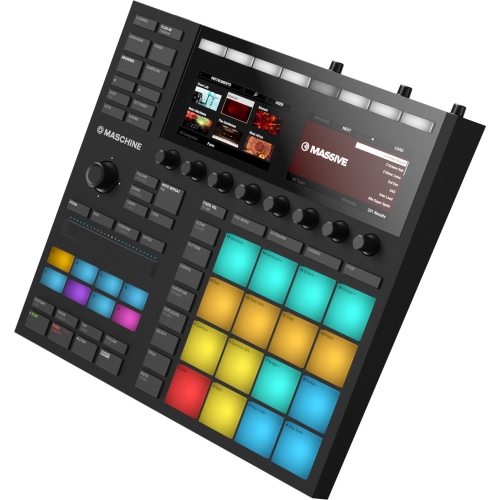 Your price for this item is $609
 -
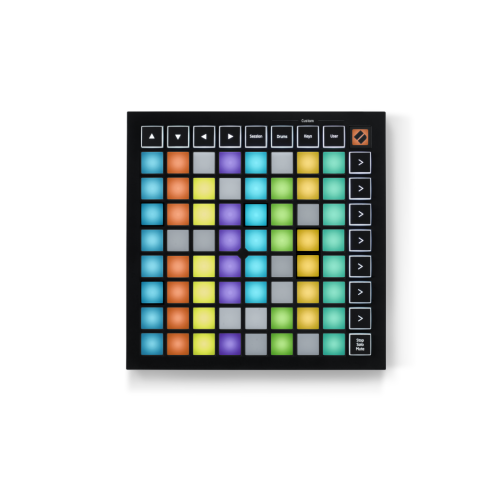 Your price for this item is $129.99
 -
![NOVATION Launchkey 25 [Mk3] Midi Keyboard Controller for Ableton Live](https://multimedia.bbycastatic.ca/multimedia/products/500x500/175/17552/17552265.png) Your price for this item is $169
Your price for this item is $169 -
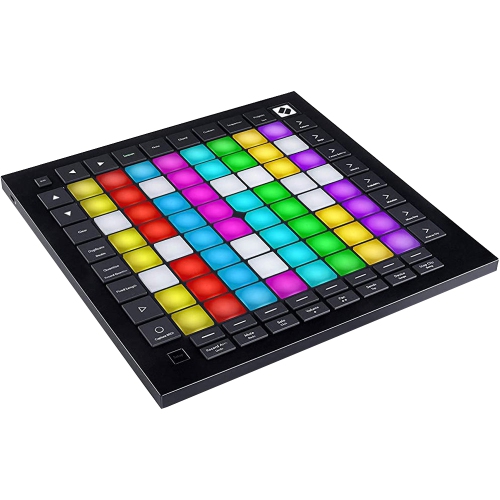 Your price for this item is $399.99
 -
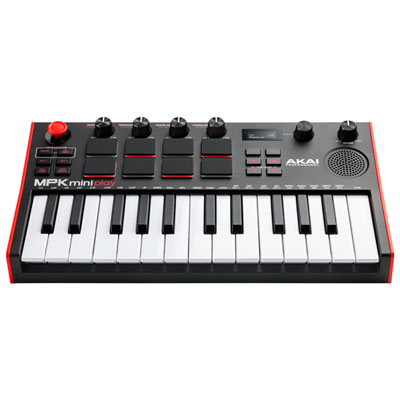 Your price for this item is $189.99
 -
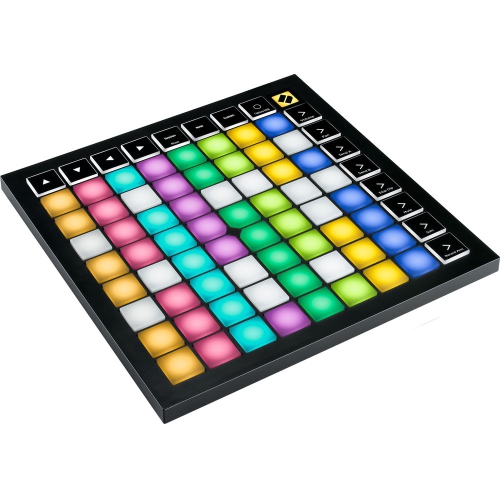 Your price for this item is $219.99
 -
![NOVATION Launchkey Mini 37 [Mk4] — Portable 37 Mini-Key, USB, Midi Keyboard Controller w Daw Integration. Chord Mode, Scale Mode, Drum Pads, And](https://multimedia.bbycastatic.ca/multimedia/products/500x500/196/19623/19623149.jpeg) Your price for this item is $229
Your price for this item is $229 -
![NOVATION Launchkey 61 [Mk4] – 61 Key Semi-Weighted, USB, Midi Keyboard Controller w Daw Integration. Chord & Scale Modes, 8 Drum Pads, &](https://multimedia.bbycastatic.ca/multimedia/products/500x500/196/19623/19623154.jpeg) Your price for this item is $399.99
Your price for this item is $399.99
Discover more categories related to Akai Mpk Mini Midi Controllers
Top Collections:
Pokemon Centers, Kindle Devices, Best Budget Office Chairs, Apple iPhones 16, Best Laptops for Writers, iPhone 15 Apple, Canon G7X Cameras, Refurbished Apple Laptops, Alarm Clock, Motorola Razr Phones
Some products may be subject to Environmental Handling Fees
(EHF) depending on your province.
Learn more about EHFs.