Paintable Cable Covers for Wall-Mounted TVs

Paintable cable covers for wall-mounted TVs help conceal visible cords while letting you match the covers to your wall colour. Compare cord covers and cable raceways based on the length of your cable run, the space needed for your cords, and the route between your TV, outlets, and connected devices.

Sort

Neater TV wiring without opening up the wall

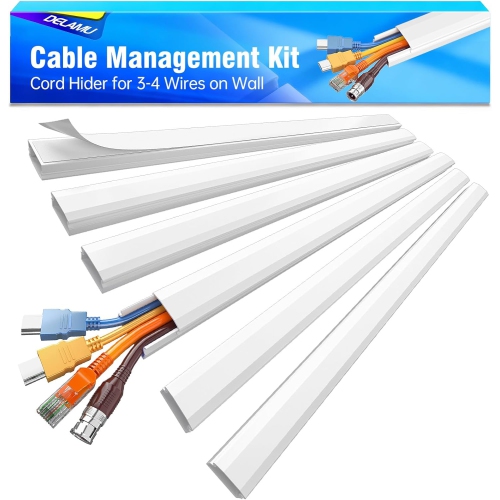
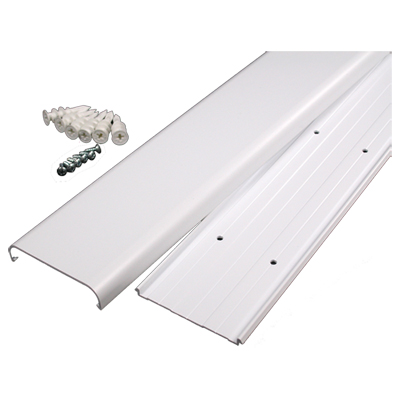
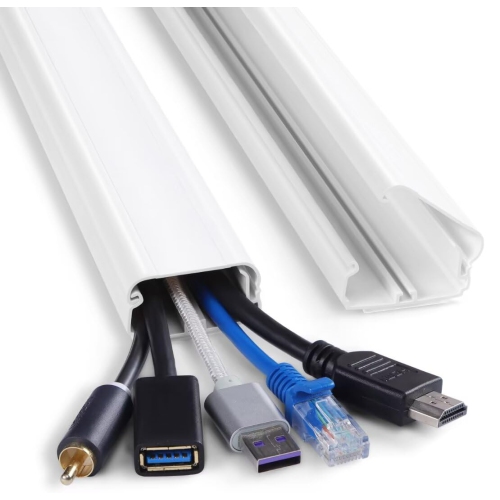
Paintable cable covers for wall-mounted TVs conceal exposed cords inside a surface-mounted channel, often called a cable raceway, that can be finished to coordinate with the wall. They are useful when a television sits above a media console and the cables would otherwise form a visible line between the screen and the furniture below. Rather than moving wiring behind drywall, an on-wall TV cord cover encloses compatible cables along the wall’s surface, keeping the installation accessible. The effect is especially noticeable against a light-coloured wall, where dark HDMI leads, audio cables and power cords can draw attention away from the screen. Many designs have a separate base and a removable front cover, allowing cables to be added or changed without replacing the entire channel. Others use a hinged opening, so access style is worth considering alongside appearance. Common materials include PVC and other rigid plastics, which provide a lightweight enclosure with a smooth, paintable face; the material and any fire-resistance rating depend on the individual design. A low-profile cover can suit a small television with a simple cable arrangement, while a deeper or wider channel may be more practical for a home theatre setup with several connections. These covers help organize visible wiring, but they do not replace an electrical outlet, extend a cord’s reach or make an unsuitable cable safe for a particular use. Power cords should only be enclosed where both the cable and raceway instructions permit it, with any required separation from signal cables maintained. Surface-mounted covers are also different from in-wall cable systems: hiding a cord behind a removable cover does not mean that the same cord is approved to run inside a wall. For households seeking a neater living room, bedroom or shared entertainment space, that distinction makes it easier to choose the right type of cable management without taking on unnecessary wall alterations.

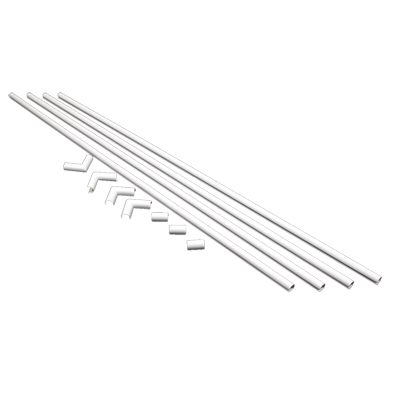
Fit depends on more than the distance between the television and the console. The useful internal space must accommodate the number and thickness of the cables without squeezing them, forcing the lid closed or creating sharp bends. A pair of slim signal cables takes up less room than a bundle containing thicker leads, and bulky connectors may need space near the ends even when they do not pass through the channel itself. Total coverage length matters too: a package containing several short sections may provide enough combined length, but it will introduce more joins than a single longer cover. Straight connectors, inside corners, outside corners and T-shaped fittings can help create a continuous route around a corner or towards equipment positioned beside the television. The fittings need to match the channel’s profile, since accessories from different systems are not necessarily interchangeable. A direct vertical run often looks the most discreet, while a route that follows a baseboard can make sense when the outlet or connected equipment sits farther away. Related Wall Cable Hiders can also suit exposed wiring beyond the immediate television area. For a TV on a swivel or extending mount, the cables need enough free movement near the screen to accommodate the mount’s full range without pulling against ports or lifting the cover from the wall. A fixed cover should not bridge a moving joint, trap a connector or interfere with ventilation. The lower end deserves similar attention: cords should reach their destination without stretching, and plugs, adapters and outlets should remain accessible. In a family room with a streaming device, soundbar and game console, a little spare channel capacity can make later changes less awkward, although an oversized cover may look unnecessarily prominent. Considering the entire route, including its bends and endpoints, helps balance a tidy appearance with everyday access to the equipment.

The mounting method and paint finish have a large influence on how well a cable cover settles into the room. Adhesive-backed channels can avoid drilled holes, but their hold depends on the wall surface, the adhesive specification and the weight they are designed to support. Textured finishes, dusty surfaces, loose paint and some wall coverings can make adhesion less reliable. Adhesive is not automatically damage-free or suitable for every rental: removal may lift paint or leave residue, so tenancy terms and the condition of the wall still matter. Screw-mounted channels provide a mechanical fixing, with suitable anchors needed where the wall construction requires them, but they also leave holes that may need filling later. Neither mounting style should rely on cables being pulled tight to hold the arrangement in place. For appearance, a paintable surface offers more flexibility than a cover left in its original colour, though “paintable” does not mean every paint will adhere equally well. Compatibility with the plastic, any required primer and the stated preparation requirements determine how evenly the finish bonds. Matching both the wall colour and its sheen usually produces a more discreet result than matching colour alone; a glossy strip can remain visible against a matte wall even when the shades are close. The channel will still have a physical profile, with small shadows along its edges, rather than disappearing completely. Paint buildup around clips, hinges or joins can also make later opening difficult, so a finish that preserves access is more useful than one that seals every seam. Day-to-day care is generally straightforward: a soft cloth removes dust, while cleaning products need to be compatible with both the cover material and the painted finish. Abrasive pads and harsh solvents can mark either surface. Over time, durability depends on secure mounting, intact clips and protection from knocks, especially where the channel reaches a busy area near the floor. A well-fitted, accessible cover keeps the focus on the television while leaving practical room for cable changes, cleaning and the occasional rearrangement of connected equipment.

FAQ

Some products may be subject to Environmental Handling Fees (EHF) depending on your province. Learn more about EHFs.