Professional Hand Held Blenders
If you're a professional chef, a restaurant owner, or a caterer, you know how important it is to have the right tools for the job. The best hand blenders are more than just a kitchen tool. They can be used to make everything from smoothies to frozen drinks to margaritas. Here are some of the best professional hand-held blenders available today.
Sort
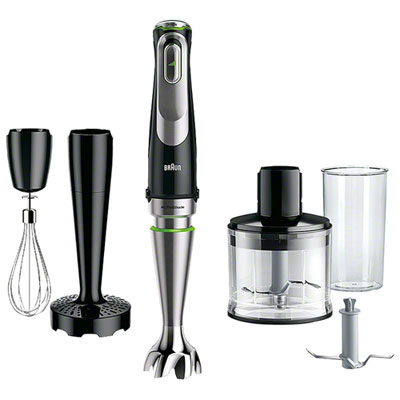
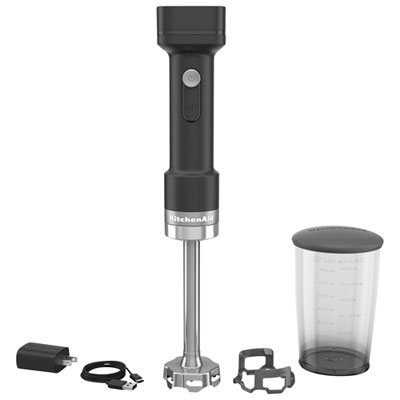
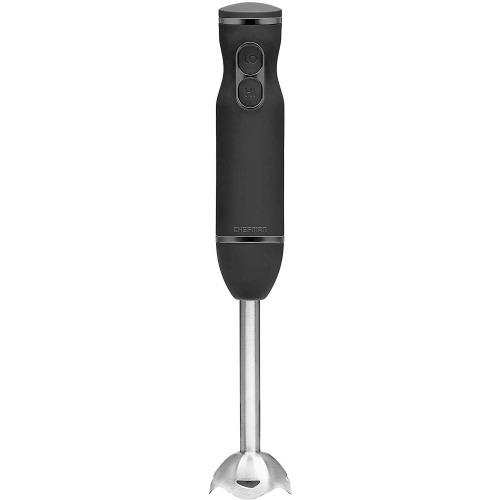
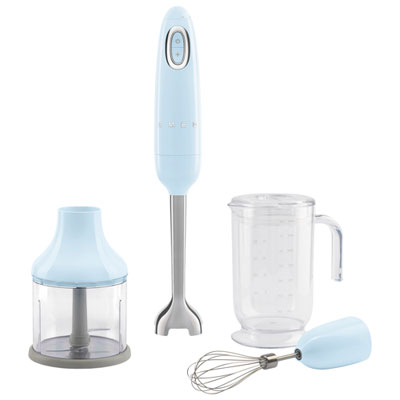
Power and precision for smooth results in large batches
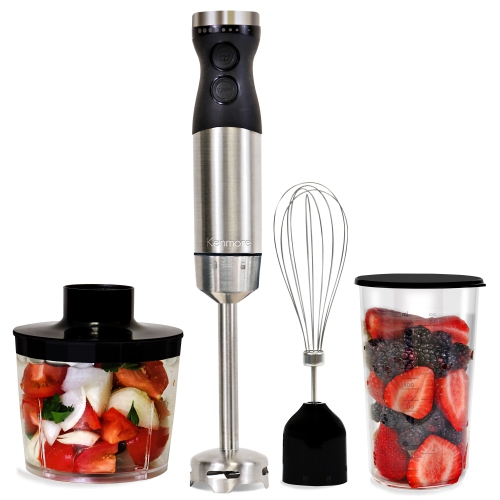
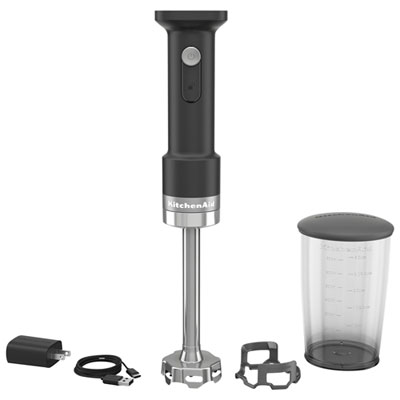
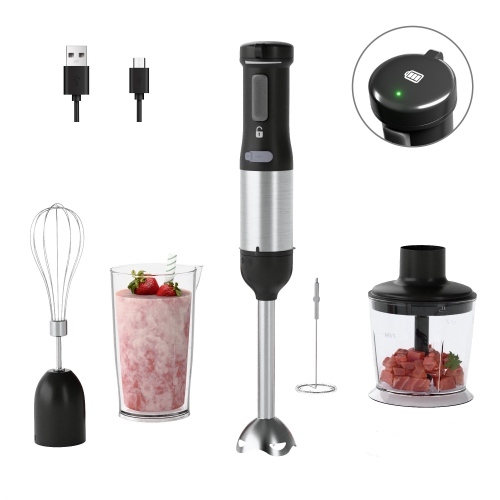
Professional hand-held blenders are designed for cooks who want the control of blending directly in a pot, bowl, pitcher, or deep container without transferring ingredients to a countertop appliance. Often called immersion blenders or stick blenders, these compact tools are especially useful for preparing smooth soups, sauces, purées, dressings, gravies, baby food, and blended drinks. A professional model typically combines a high-powered motor with a durable stainless-steel blending shaft and a well-designed blade guard, helping it move through dense or fibrous ingredients with less hesitation. Motor power is an important starting point: models rated from 500 watts to 750 watts or more are commonly suited to demanding kitchen tasks, while a motor of 600 watts or higher may be preferable for frequent use, larger batches, frozen fruit, cooked root vegetables, or other ingredients that place more strain on the blades. Power is only part of the picture, however. Variable speed control gives you the ability to begin gently and increase gradually, which is useful when blending hot liquids or emulsifying a sauce. A pulse function can also help break up stubborn pieces without over-processing the entire batch. For restaurants, catering kitchens, culinary classrooms, bakeries, and serious home kitchens, these controls can make a noticeable difference when several batches need to be prepared with consistent texture.
The blending shaft deserves close attention because its length, material, and release mechanism affect both comfort and versatility. An 8-inch to 12-inch shaft can provide practical reach into a deep stockpot while keeping your hands farther from hot ingredients, and a longer commercial shaft may be useful for very large vessels. Stainless steel is valued for its durability and resistance to staining, particularly when the blender is used with tomato sauces, richly coloured vegetables, or acidic ingredients. A removable shaft can make cleaning and storage easier, while a fixed shaft may offer a sturdy, straightforward construction for frequent operation. Blade guard design is equally important. A bell-shaped guard helps guide food towards the blades, supports an even flow, and can reduce splashing when the blender is held at the right angle. Some guards are shaped to help create a smooth vortex without pulling the blender aggressively against the bottom of the container. If you are working with non-stick cookware, look for a protective base or cookware-safe design that helps prevent unwanted scratches. Always follow the manufacturer’s instructions for operating in hot liquids, and keep the blade head fully submerged before switching the motor on to help limit splatter. A deep pot with ample headroom is generally more comfortable and safer than a shallow saucepan, especially when blending soup or a thin sauce.
Ergonomics become increasingly important during longer blending sessions. A narrow, non-slip handle with a balanced weight can reduce hand fatigue when preparing several litres of soup, large batches of purée, or repeated sauces during service. A trigger-style control may allow one-handed operation, while clearly placed speed controls can make it easier to adjust the texture as you work. Consider the handle circumference, button placement, cord length, and overall weight, particularly if the blender will be used by several people in a busy kitchen. Commercial users may also value a robust motor housing, durable metal components, a generously sized shaft, and parts that can be cleaned efficiently between recipes. At home, a professional hand-held blender can be a practical choice for anyone who regularly cooks from scratch, makes smooth soups during the cooler months, or prepares sauces and fruit-based drinks as the weather warms. It can be helpful for a chef building a prep station, a caterer handling large batches, a baker making fillings and custards, or a home cook who wants to blend directly in the same vessel used for cooking. It may also be a thoughtful gift for a culinary student, new homeowner, or enthusiastic cook setting up a more capable kitchen. When comparing models, match the motor and shaft size to the volume and texture of the food you prepare most often, then consider cleaning, storage, speed control, grip comfort, and cookware compatibility. Those details can be just as valuable as raw power when choosing equipment for dependable everyday preparation. For additional options suited to demanding kitchen tasks, explore Professional Blenders.
The blending shaft deserves close attention because its length, material, and release mechanism affect both comfort and versatility. An 8-inch to 12-inch shaft can provide practical reach into a deep stockpot while keeping your hands farther from hot ingredients, and a longer commercial shaft may be useful for very large vessels. Stainless steel is valued for its durability and resistance to staining, particularly when the blender is used with tomato sauces, richly coloured vegetables, or acidic ingredients. A removable shaft can make cleaning and storage easier, while a fixed shaft may offer a sturdy, straightforward construction for frequent operation. Blade guard design is equally important. A bell-shaped guard helps guide food towards the blades, supports an even flow, and can reduce splashing when the blender is held at the right angle. Some guards are shaped to help create a smooth vortex without pulling the blender aggressively against the bottom of the container. If you are working with non-stick cookware, look for a protective base or cookware-safe design that helps prevent unwanted scratches. Always follow the manufacturer’s instructions for operating in hot liquids, and keep the blade head fully submerged before switching the motor on to help limit splatter. A deep pot with ample headroom is generally more comfortable and safer than a shallow saucepan, especially when blending soup or a thin sauce.
Ergonomics become increasingly important during longer blending sessions. A narrow, non-slip handle with a balanced weight can reduce hand fatigue when preparing several litres of soup, large batches of purée, or repeated sauces during service. A trigger-style control may allow one-handed operation, while clearly placed speed controls can make it easier to adjust the texture as you work. Consider the handle circumference, button placement, cord length, and overall weight, particularly if the blender will be used by several people in a busy kitchen. Commercial users may also value a robust motor housing, durable metal components, a generously sized shaft, and parts that can be cleaned efficiently between recipes. At home, a professional hand-held blender can be a practical choice for anyone who regularly cooks from scratch, makes smooth soups during the cooler months, or prepares sauces and fruit-based drinks as the weather warms. It can be helpful for a chef building a prep station, a caterer handling large batches, a baker making fillings and custards, or a home cook who wants to blend directly in the same vessel used for cooking. It may also be a thoughtful gift for a culinary student, new homeowner, or enthusiastic cook setting up a more capable kitchen. When comparing models, match the motor and shaft size to the volume and texture of the food you prepare most often, then consider cleaning, storage, speed control, grip comfort, and cookware compatibility. Those details can be just as valuable as raw power when choosing equipment for dependable everyday preparation. For additional options suited to demanding kitchen tasks, explore Professional Blenders.
Top selling and popular products
-
 Your price for this item is $159.99
 -
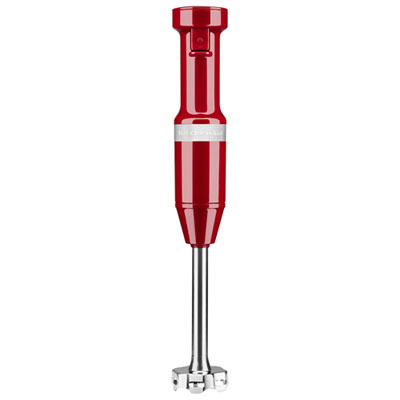 Your price for this item is $59.99
 -
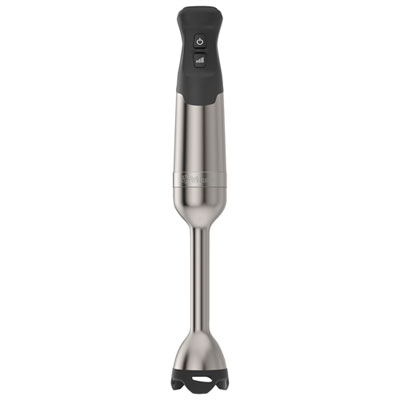 Your price for this item is $249.99
 -
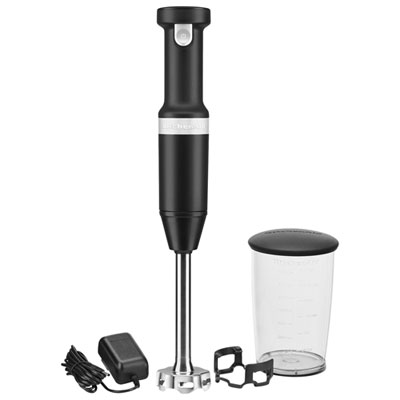 Your price for this item is $99.99
 -
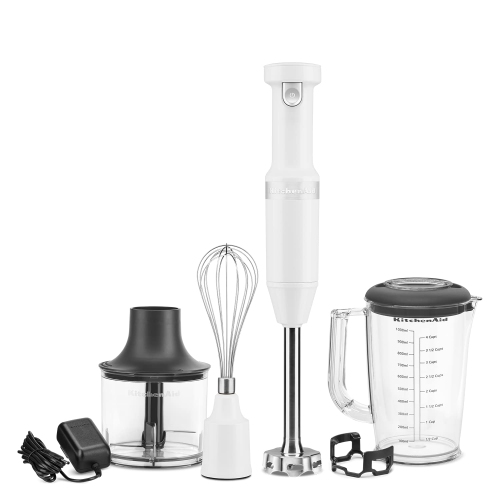 Your price for this item is $129.99
 -
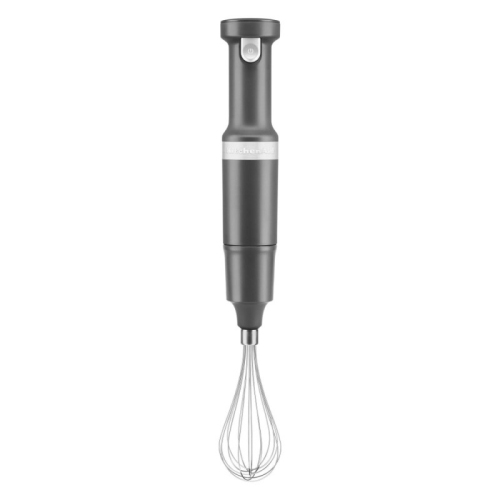 Your price for this item is $129.99
 -
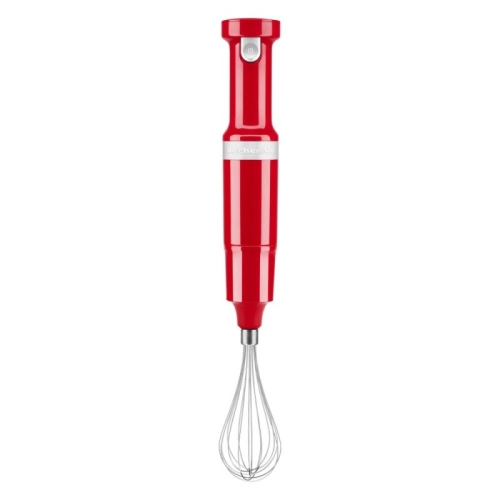 Your price for this item is $129.99
 -
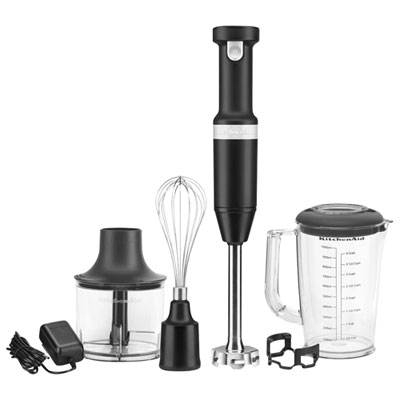 Your price for this item is $129.99
Discover more categories related to Professional Hand Held Blenders
Top Collections:
Pokemon Centers, Kindle Devices, Best Cell Phones Under $500, Alarm Clock, Canon G7X Cameras, iPhone 15 Apple, Apple iPhones 16, Laptops for Students, iPhone 14 256GB, Budget Smartphones
Some products may be subject to Environmental Handling Fees
(EHF) depending on your province.
Learn more about EHFs.