24 105mm Lenses
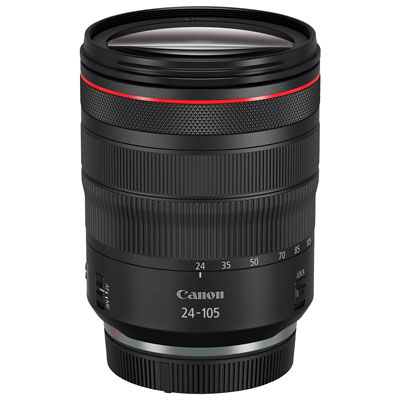
Capture every detail and bring your photography to the next level with our wide selection of 24-105mm lenses. Designed to deliver exceptional image quality and versatility, these lenses are a must-have for almost any professional or aspiring photographer. Whether you're capturing stunning landscapes, shooting portraits with exquisite detail, or documenting fast-paced action, our range of 24-105mm lenses will ensure you never miss a moment. They feature a fast and accurate autofocus system, a wide aperture range, and advanced image stabilization technology to help you capture crisp, clear images in almost any lighting condition.
Sort
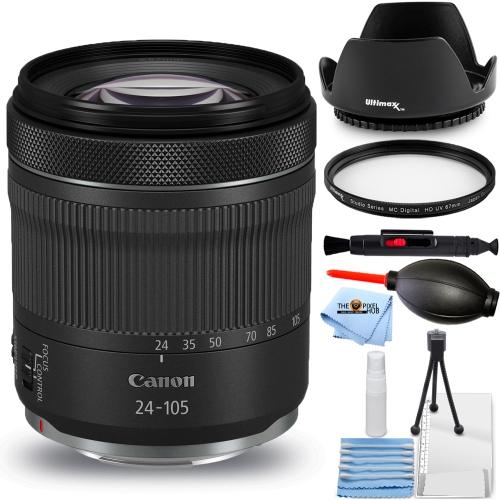
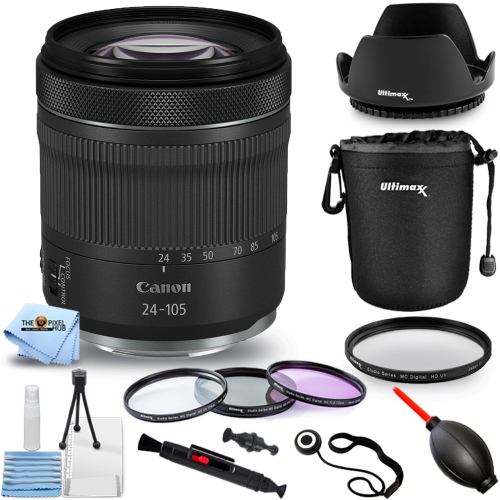
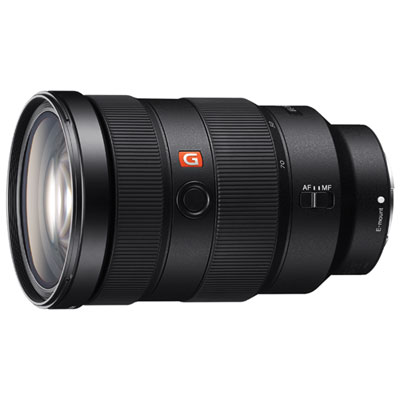
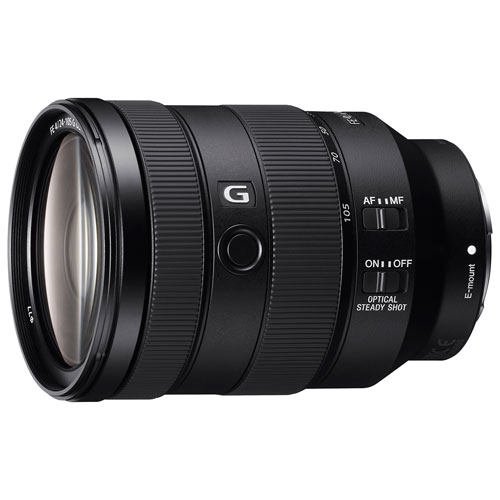
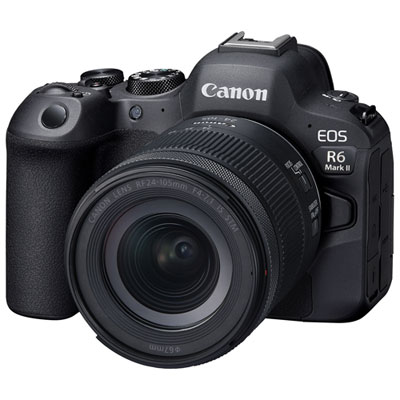

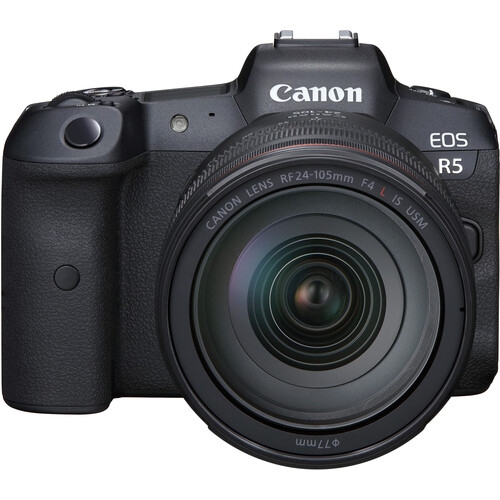
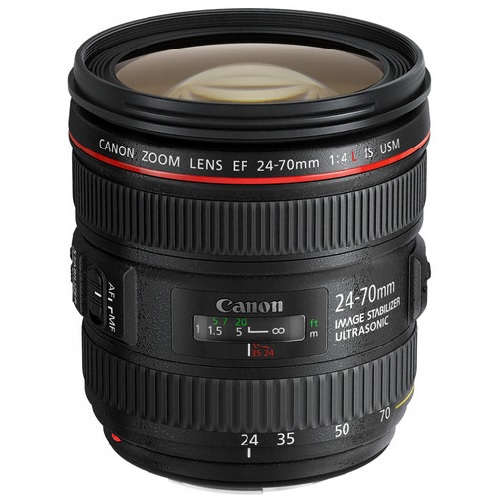
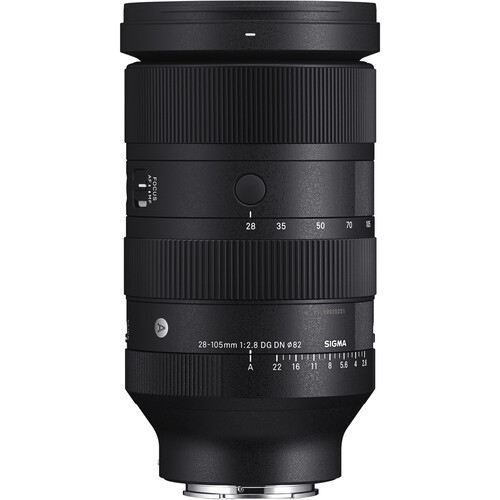
One zoom for wide views, portraits, and everyday moments
A 24-105mm lens is one of the most versatile choices for photographers who want a practical, all-purpose zoom without carrying a full camera bag of separate lenses. Its broad focal-length range moves from a useful 24mm wide-angle view to a flattering 105mm short-telephoto perspective, making it well suited to travel, landscapes, architecture, family gatherings, street photography, portraits, and everyday snapshots. At 24mm, you can capture a sweeping mountain view, a historic building, or a group of people gathered around a table while keeping the scene’s sense of space. Zoom towards 50mm for a natural-looking perspective that works well for casual photos and documentary-style images, then continue towards 85mm or 105mm when you want to isolate a face, compress distant details, or photograph a subject from a comfortable distance. This flexibility is especially helpful when moving closer is impractical, such as during a ceremony, performance, sporting event, or wildlife encounter. For travellers, a 24-105mm lens can serve as a convenient one-lens solution, reducing the need to change lenses outdoors as the weather warms, during busy sightseeing days, or throughout cooler-season walks when keeping equipment protected and easy to reach matters. Before choosing one, confirm that the lens mount matches your camera and check whether it is designed for a full-frame or crop-sensor camera. A lens made for a full-frame system may also work on some crop-sensor bodies, but the effective field of view will be narrower, which changes how wide 24mm feels. Camera compatibility, body size, weight, and balance are important considerations as well; a lens that feels comfortable in the hand is more likely to become the one you take everywhere.
The maximum aperture is another key point when comparing 24-105mm lenses. Some models use a constant f/4 aperture, which means the widest available aperture remains the same throughout the zoom range. This can make exposure settings easier to manage while recording video or photographing changing scenes, and it can provide consistent performance from wide-angle to telephoto. Other options use a variable aperture, such as f/4-7.1, which can help keep the lens more compact and accessible while requiring you to account for less light at the longer end of the zoom. Wider apertures generally make it easier to photograph indoors, at dusk, or in other dim conditions, while also creating a softer background behind a portrait subject. A smaller aperture can still be an excellent choice for daytime travel, landscapes, architecture, and group photos where you want more of the scene to remain in focus. Built-in optical image stabilization is valuable for handheld still photography and video because it can help reduce the visible effect of camera shake, particularly at longer focal lengths or in lower light. Stabilization does not freeze a moving subject, so shutter speed remains important when photographing children, pets, athletes, or performers, but it can help steady the camera when the subject itself is relatively still. Autofocus design also deserves attention. Quiet, responsive focusing motors are useful for candid photography and video, where abrupt mechanical noise can distract from the moment or appear on a recording. Look for features such as smooth subject tracking, reliable eye detection compatibility, a close minimum focusing distance, and a manual-focus control layout that feels intuitive. A close focusing distance adds versatility for food, flowers, travel details, and small objects, although a 24-105mm zoom is not automatically a dedicated macro lens. Weather-resistant construction, a supplied lens hood, filter compatibility, and a robust zoom mechanism may also matter for photographers who spend long days outdoors.
These lenses can be a thoughtful gift for someone building a camera kit, moving from a basic kit zoom to a more capable everyday option, or preparing for a trip, family celebration, graduation, or creative project. They are equally useful for experienced photographers who want a dependable walk-around lens for situations where changing lenses would mean missing a fleeting expression or an unexpected burst of light. A beginner may appreciate having one lens that supports experimentation with composition: widening the frame to emphasize a dramatic foreground, zooming in to simplify a busy background, or stepping back and using the longer end for a more compressed portrait. A content creator may use a 24-105mm lens for interviews, product demonstrations, travel videos, and indoor recordings, especially when quiet autofocus and stabilization are available. For photographers comparing a similar but shorter standard zoom, 24 70mm Lenses may be worth exploring when a brighter aperture, smaller size, or a more compact range is a priority. When selecting among 24-105mm lenses, consider the camera system you already own, your typical lighting conditions, how often you carry your gear, and whether you photograph mostly still images, video, or both. A constant-aperture design may suit demanding event work and consistent video exposure, while a lighter variable-aperture lens can be an easy companion for travel and daytime photography. It is also worth checking the filter size if you plan to use a polarizer or neutral-density filter, as well as the included accessories and warranty coverage. The right choice should feel like a natural extension of your camera: wide enough for the view in front of you, long enough to bring distant details closer, and dependable enough to stay mounted from the first photo of the day to the last.
The maximum aperture is another key point when comparing 24-105mm lenses. Some models use a constant f/4 aperture, which means the widest available aperture remains the same throughout the zoom range. This can make exposure settings easier to manage while recording video or photographing changing scenes, and it can provide consistent performance from wide-angle to telephoto. Other options use a variable aperture, such as f/4-7.1, which can help keep the lens more compact and accessible while requiring you to account for less light at the longer end of the zoom. Wider apertures generally make it easier to photograph indoors, at dusk, or in other dim conditions, while also creating a softer background behind a portrait subject. A smaller aperture can still be an excellent choice for daytime travel, landscapes, architecture, and group photos where you want more of the scene to remain in focus. Built-in optical image stabilization is valuable for handheld still photography and video because it can help reduce the visible effect of camera shake, particularly at longer focal lengths or in lower light. Stabilization does not freeze a moving subject, so shutter speed remains important when photographing children, pets, athletes, or performers, but it can help steady the camera when the subject itself is relatively still. Autofocus design also deserves attention. Quiet, responsive focusing motors are useful for candid photography and video, where abrupt mechanical noise can distract from the moment or appear on a recording. Look for features such as smooth subject tracking, reliable eye detection compatibility, a close minimum focusing distance, and a manual-focus control layout that feels intuitive. A close focusing distance adds versatility for food, flowers, travel details, and small objects, although a 24-105mm zoom is not automatically a dedicated macro lens. Weather-resistant construction, a supplied lens hood, filter compatibility, and a robust zoom mechanism may also matter for photographers who spend long days outdoors.
These lenses can be a thoughtful gift for someone building a camera kit, moving from a basic kit zoom to a more capable everyday option, or preparing for a trip, family celebration, graduation, or creative project. They are equally useful for experienced photographers who want a dependable walk-around lens for situations where changing lenses would mean missing a fleeting expression or an unexpected burst of light. A beginner may appreciate having one lens that supports experimentation with composition: widening the frame to emphasize a dramatic foreground, zooming in to simplify a busy background, or stepping back and using the longer end for a more compressed portrait. A content creator may use a 24-105mm lens for interviews, product demonstrations, travel videos, and indoor recordings, especially when quiet autofocus and stabilization are available. For photographers comparing a similar but shorter standard zoom, 24 70mm Lenses may be worth exploring when a brighter aperture, smaller size, or a more compact range is a priority. When selecting among 24-105mm lenses, consider the camera system you already own, your typical lighting conditions, how often you carry your gear, and whether you photograph mostly still images, video, or both. A constant-aperture design may suit demanding event work and consistent video exposure, while a lighter variable-aperture lens can be an easy companion for travel and daytime photography. It is also worth checking the filter size if you plan to use a polarizer or neutral-density filter, as well as the included accessories and warranty coverage. The right choice should feel like a natural extension of your camera: wide enough for the view in front of you, long enough to bring distant details closer, and dependable enough to stay mounted from the first photo of the day to the last.
Top selling and popular products
-
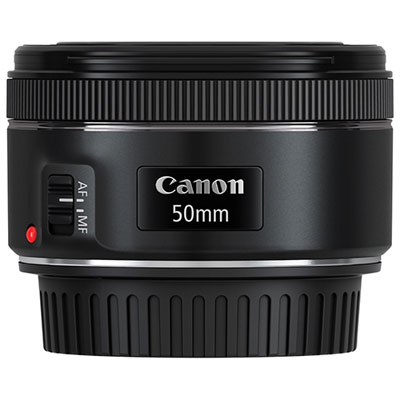 Your price for this item is $169.99
 -
 Your price for this item is $329.99
 -
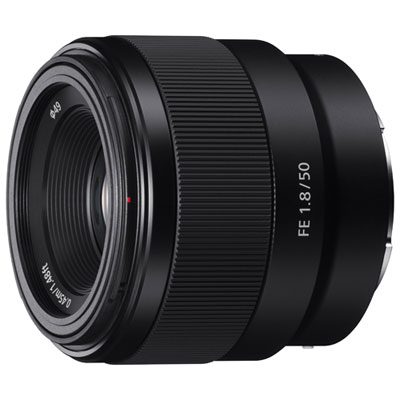 Your price for this item is $349.99
 -
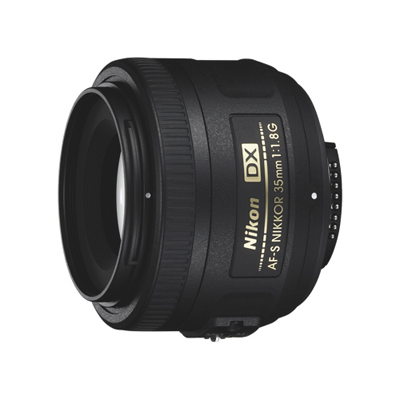 Your price for this item is $258.98
 -
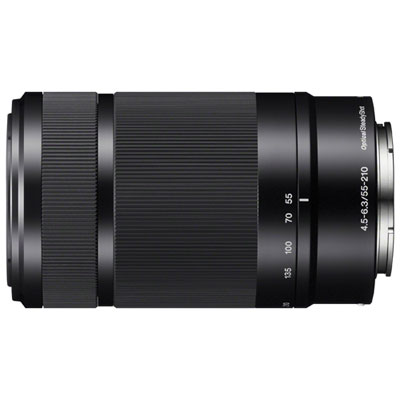 Your price for this item is $399.99
 -
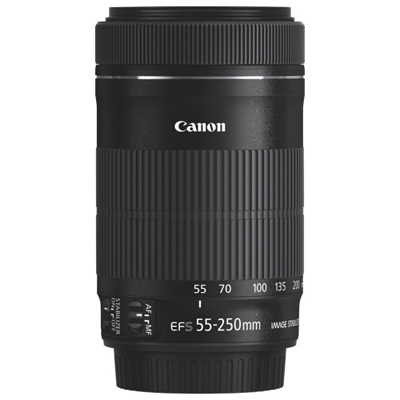 Your price for this item is $399.99
 -
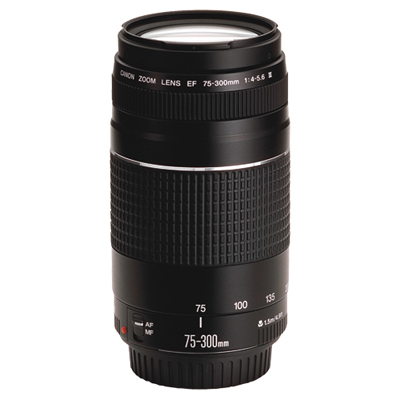 Your price for this item is $199.99
 -
 Your price for this item is $174.99
Discover more categories related to 24 105mm Lenses
Top Collections:
Pokemon Centers, Kindle Devices, Best Cell Phones Under $500, Alarm Clock, Canon G7X Cameras, iPhone 15 Apple, Laptops for Students, Budget Smartphones, iPhone 14 256GB, Best Camera Tripods Under $100
Some products may be subject to Environmental Handling Fees
(EHF) depending on your province.
Learn more about EHFs.