Back To School Microphones for Student Podcasting
Find back-to-school microphones for student podcasting, from class projects and interviews to campus conversations. Browse microphones with your recording setup in mind, comparing device compatibility, connection type, and pickup pattern to find an option suited to solo episodes or group discussions.



FAQ
USB microphones connect directly to a compatible computer and typically include the electronics needed to convert audio into a digital signal. XLR microphones connect through an audio interface or mixer. For a back-to-school podcasting setup, the choice depends on your available equipment, connection preferences and number of speakers.
A pickup pattern describes the directions from which a microphone captures sound. Cardioid microphones mainly capture sound from the front, omnidirectional microphones capture sound from all directions, and bidirectional microphones capture sound from the front and back. These patterns suit different seating arrangements and podcast formats.
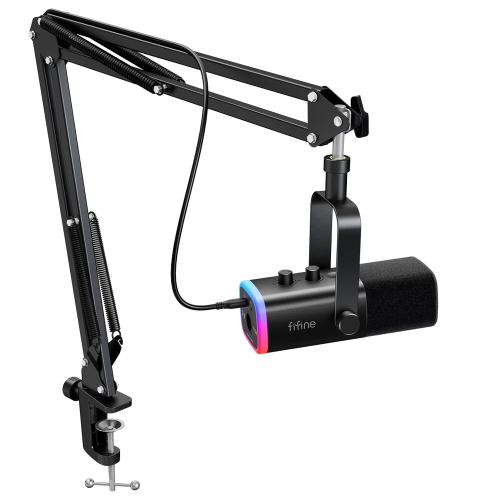
Common accessories include a desktop stand or boom arm, a pop filter, headphones and compatible cables. XLR setups also require an audio interface or mixer with suitable microphone inputs. Check which accessories are included with your microphone before assembling your setup.
Some microphones support compatible tablets and phones through USB-C or another supported connection. Compatibility depends on the microphone, device, operating system and recording app. Certain setups require an adapter or an external power source, so check the connection and power requirements for both devices.
A common arrangement uses one XLR microphone per host, connected to an audio interface or mixer with enough microphone inputs. Some recording applications can also accept multiple USB microphones, though support varies. Separate recording tracks let students edit each host’s audio individually.
Top selling and popular products
Discover more categories related to Back To School Microphones for Student Podcasting
Some products may be subject to Environmental Handling Fees (EHF) depending on your province. Learn more about EHFs.