24mm Lenses
Looking to enhance your photography skills? Look no further than our collection of 24mm lenses. With their wide-angle perspective and exceptional image quality, these lenses are perfect for capturing breathtaking landscapes, architectural details, and group shots with ease. Whether you're a professional photographer or an avid hobbyist, our range of 24mm lenses offers versatility and precision to help you achieve stunning results in every shot. Explore our selection today and take your photography to new heights.
Sort
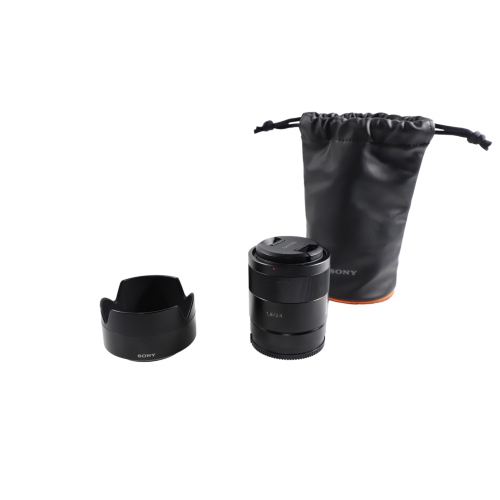

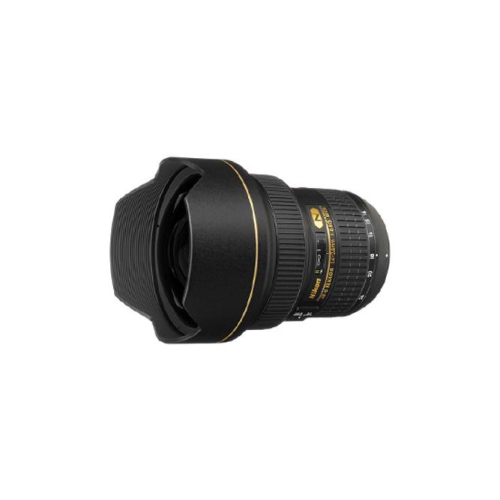
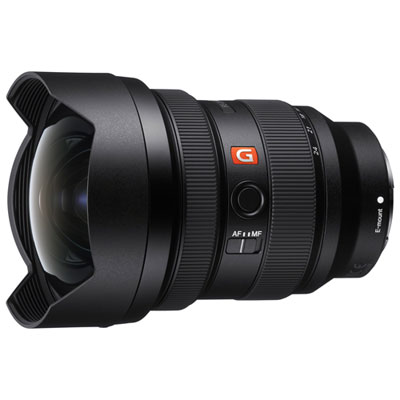
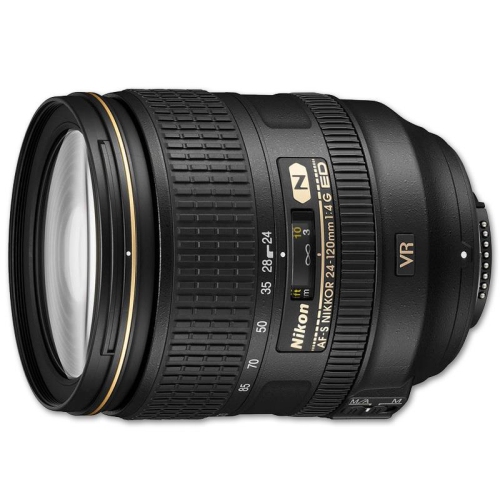
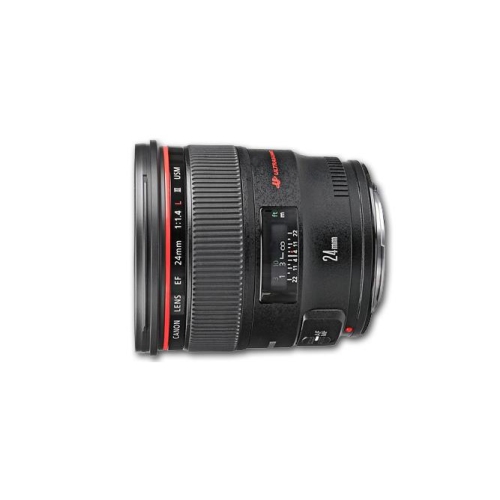
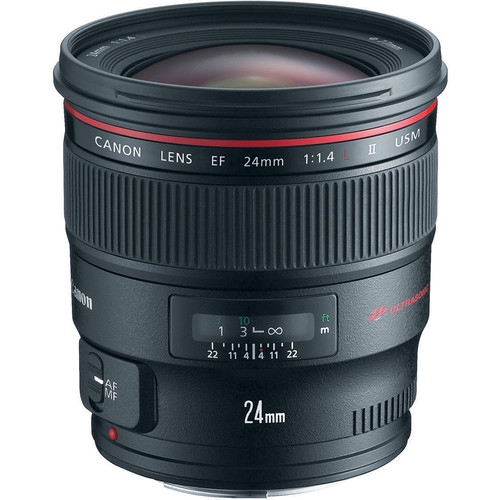
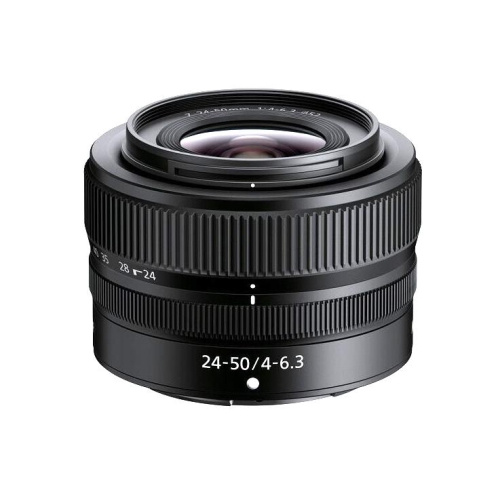
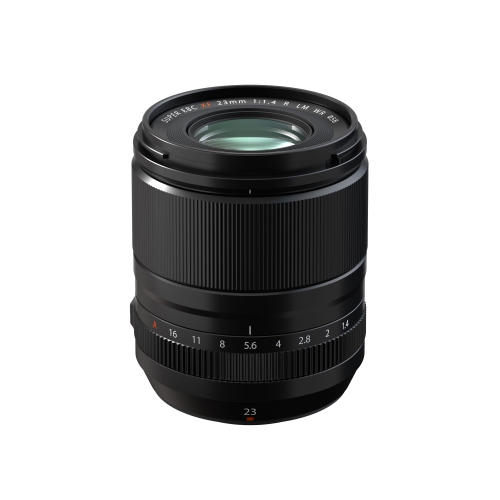
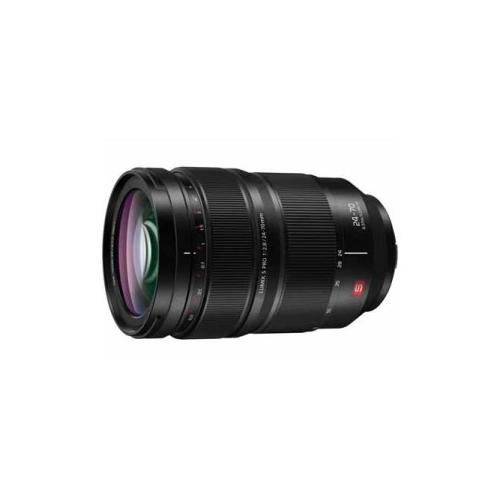
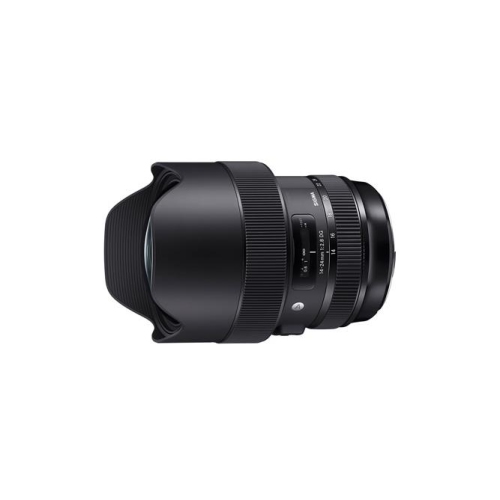
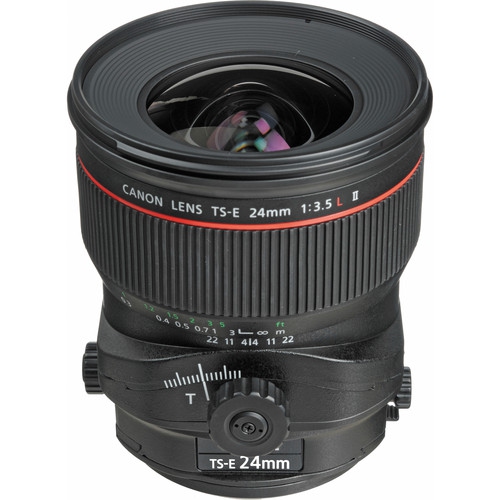
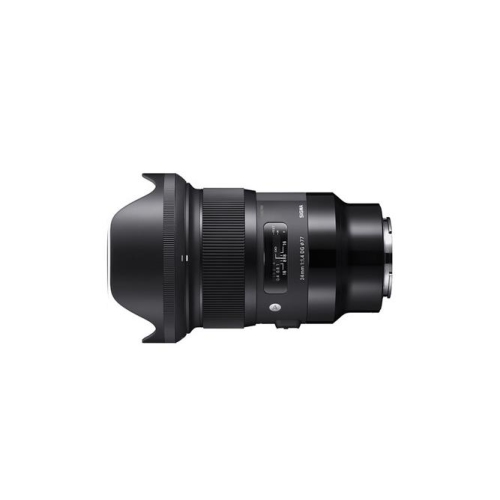
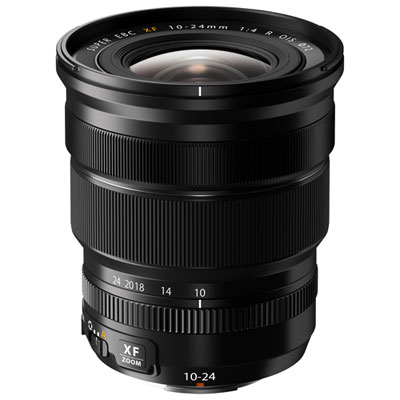
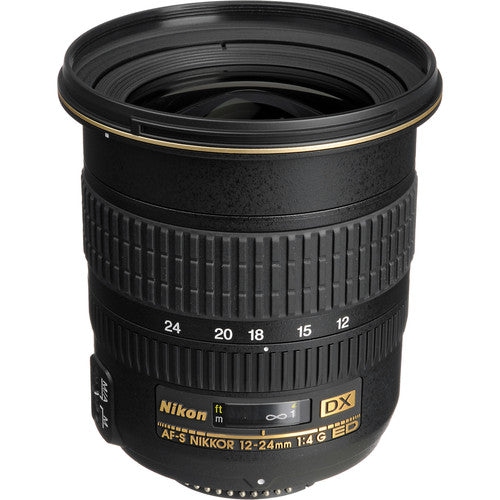
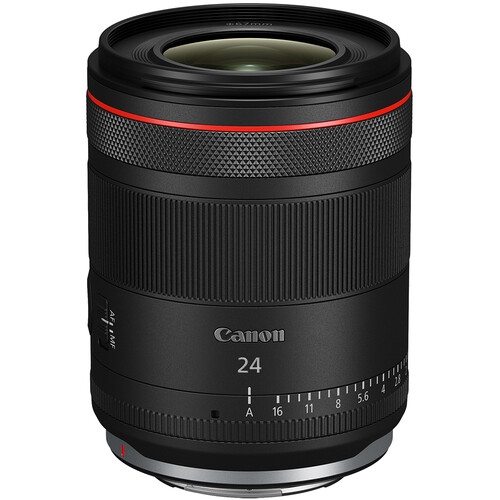
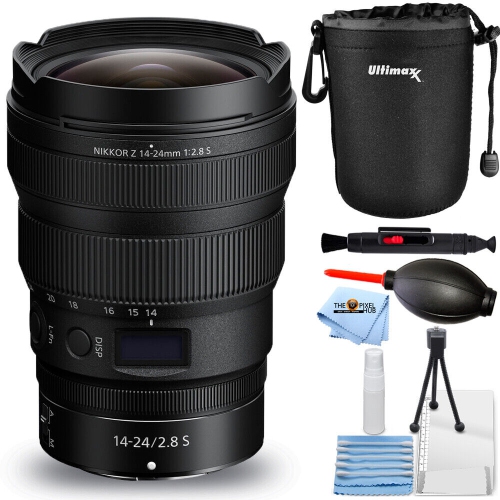
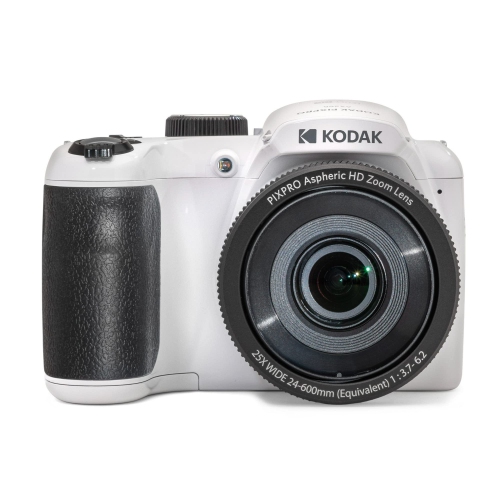
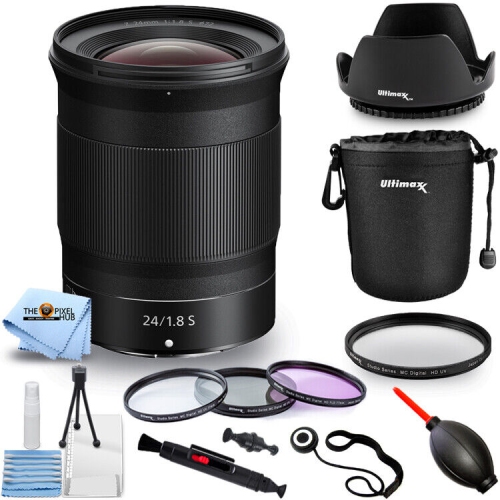

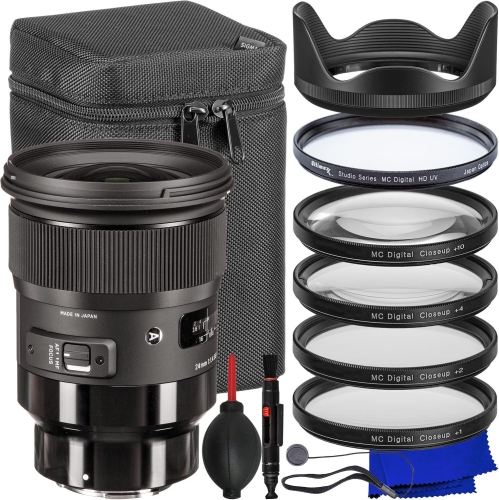
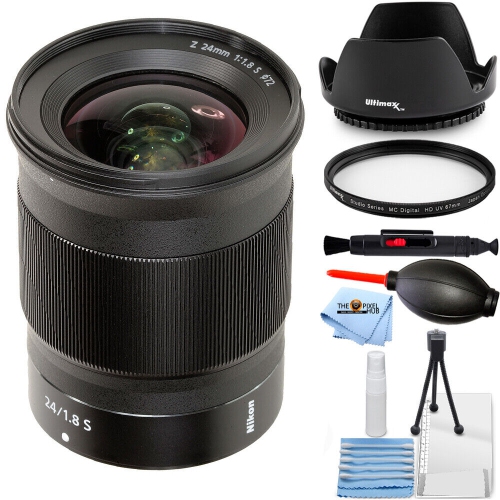
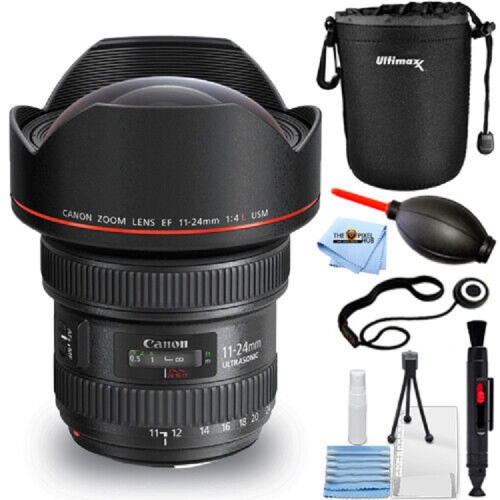
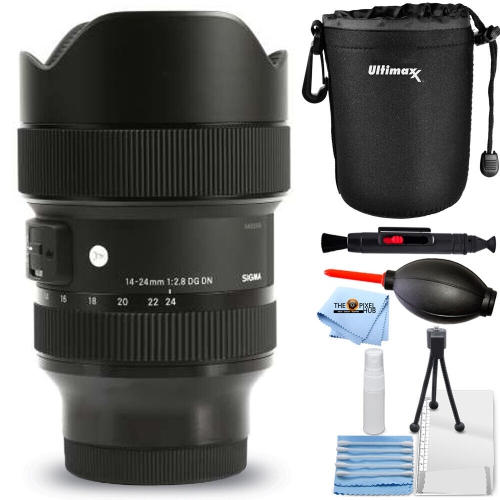
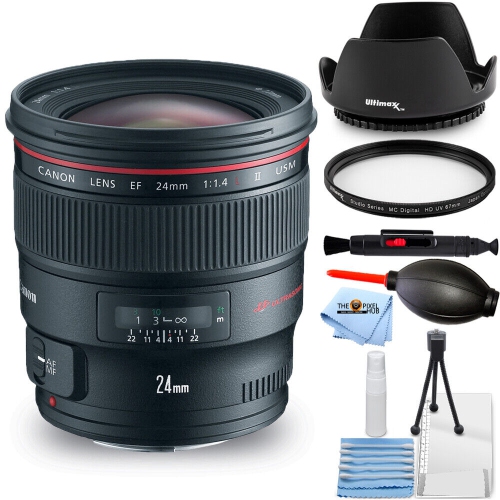
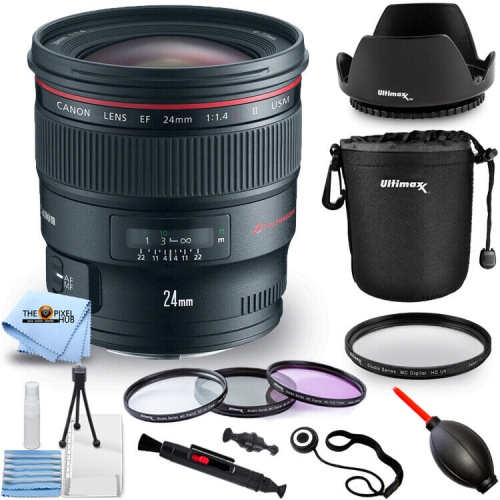
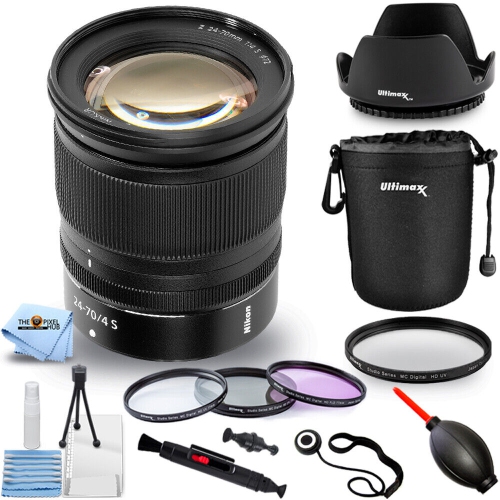
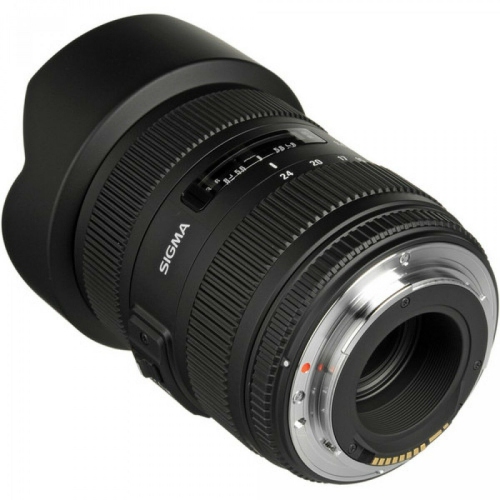
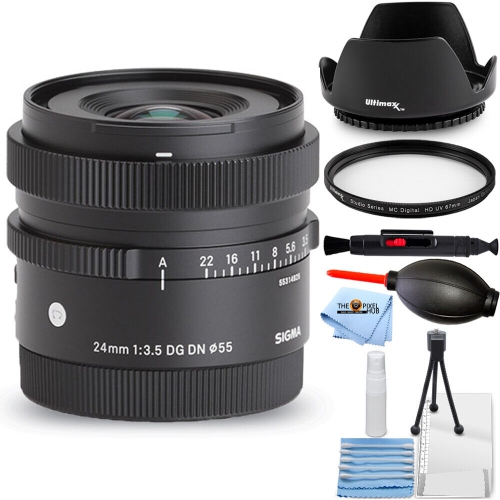
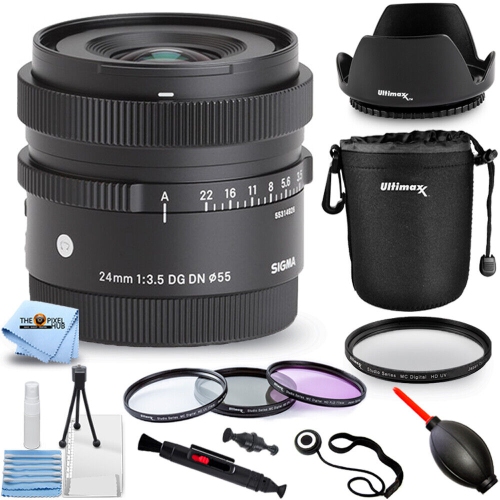

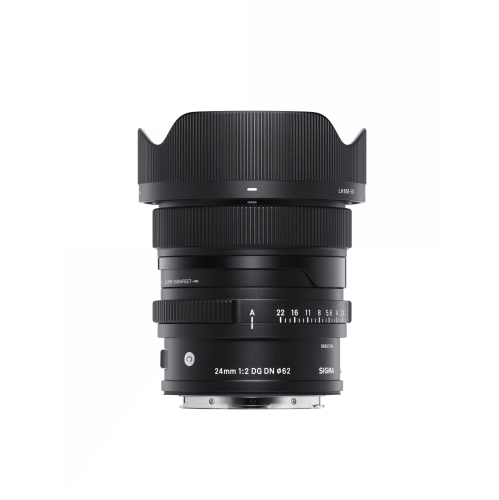
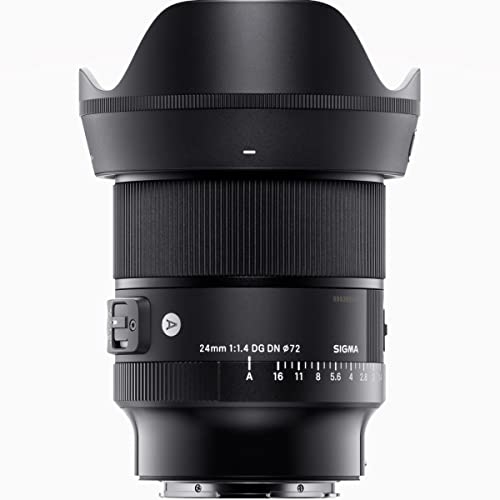
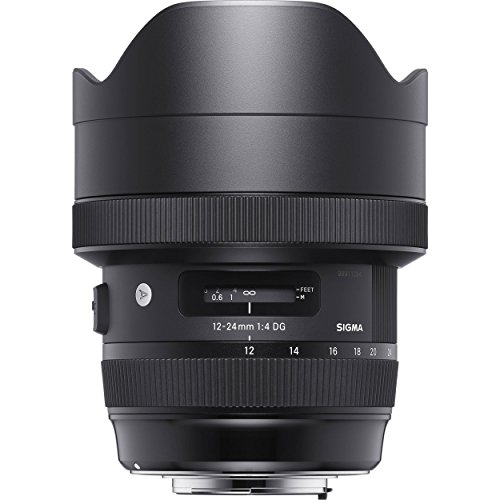
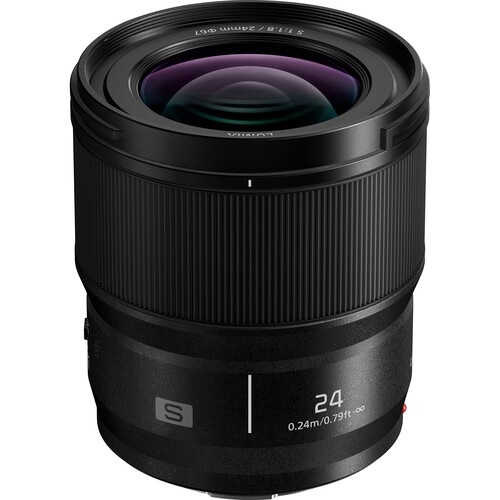
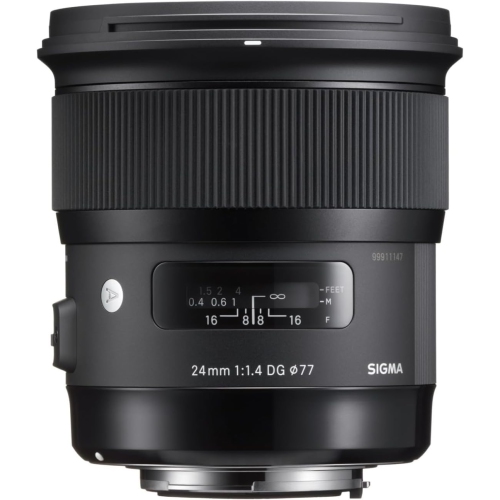
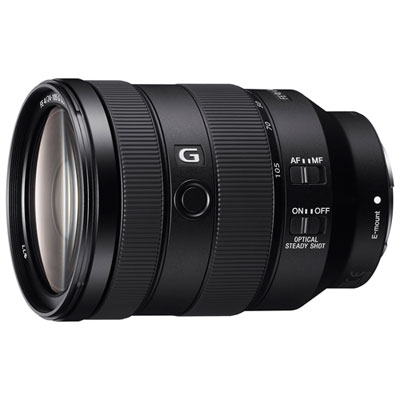
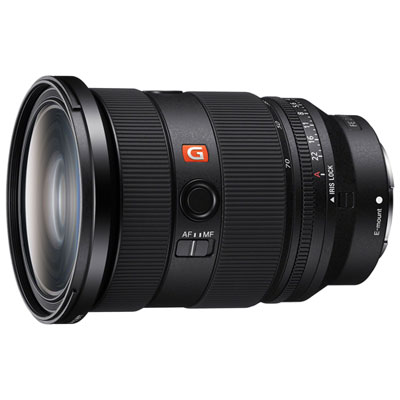
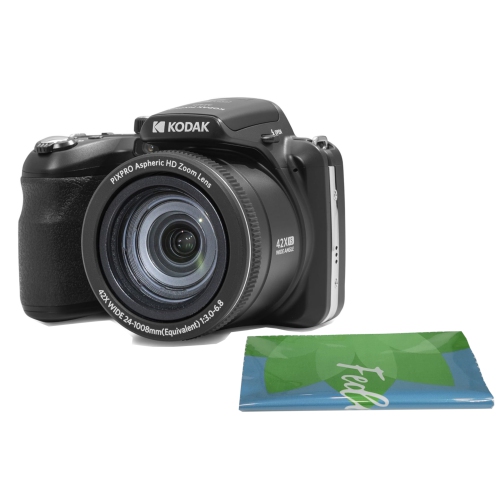
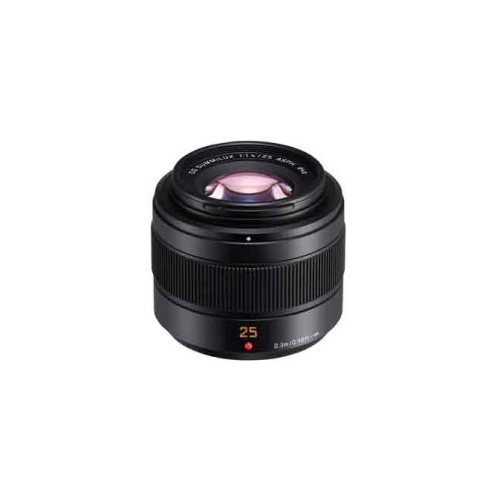
A wide perspective for scenes rich with context
24mm lenses are wide-angle camera lenses valued for their ability to capture a broad field of view while keeping a strong sense of presence in the scene. A 24mm focal length is especially useful for landscapes, architecture, travel photography, street scenes and environmental portraits, where the surrounding setting is an important part of the image. Rather than isolating a subject from its surroundings, a 24mm lens helps show the person, place and details that give a photograph its story. It can record a sweeping view of a mountain range, the lines and height of a building, or the atmosphere of a busy city street while still keeping the main subject prominent in the foreground. Indoors, the wider perspective can be helpful in rooms, studios and event spaces where stepping farther back is not practical. Many photographers also enjoy 24mm lenses for everyday walks because they encourage close, engaging compositions: moving nearer to a bicycle, market stall, doorway or person can make the foreground feel immediate while the background adds context. A prime 24mm lens has a fixed focal length and often offers a compact design, a bright maximum aperture or both, making it a practical choice for low-light scenes, candid photography and creative depth-of-field effects. A 24mm zoom lens provides more framing flexibility, allowing photographers to move from a wide perspective to a slightly tighter composition without changing lenses. The best choice depends on the camera system, shooting habits and the balance between portability, versatility and performance.
Camera compatibility is one of the most important considerations when choosing a 24mm lens. Lenses are designed for specific mounts, so the mount must match the camera body or be supported by a suitable adapter. It is also important to check whether the lens is intended for a full-frame camera or a camera with a smaller sensor. On a full-frame camera, 24mm provides the familiar wide-angle perspective associated with this focal length. On an APS-C or other crop-sensor camera, the same lens produces a narrower angle of view, often making it feel closer to a 35mm-equivalent focal length depending on the sensor format. That slightly tighter perspective can be appealing for street photography, portraits that include surroundings and general-purpose shooting, while photographers seeking an especially expansive view may prefer a lens designed specifically for their sensor size. Aperture is another key detail. A wider aperture can allow more light to reach the sensor, which is useful for indoor photography, evening scenes and subject separation, while a smaller and lighter lens may be easier to carry during travel or extended walks. Autofocus speed and accuracy matter for moving subjects, spontaneous moments and video, whereas manual focus controls may appeal to photographers working carefully with architecture, landscapes or night scenes. Image stabilization can help reduce the effects of camera shake when shooting handheld at slower shutter speeds, although it does not freeze a moving subject. Build quality, weather resistance, filter size, minimum focusing distance and close-focusing performance can also influence the way a lens fits into a camera bag. A close-focusing 24mm lens can bring attention to flowers, food, craftwork or small objects while retaining enough background to show where the photograph was made.
Because 24mm lenses are adaptable and useful across several styles, they can suit beginners building a first interchangeable-lens kit as well as experienced photographers adding a specialized perspective to an established collection. A compact prime can be a thoughtful gift for someone who enjoys travel, family gatherings, city walks or photographing pets and interiors, particularly when their existing kit feels bulky or limited in low light. A more advanced lens with a bright aperture, fast focusing and refined optical performance may appeal to enthusiasts who photograph weddings, events, real estate, architecture or dramatic landscapes. When choosing a gift, confirm the recipient’s camera mount and sensor format before considering features such as aperture, size and focusing performance. Photographers often appreciate a 24mm lens during the cooler months, when indoor gatherings, window-lit portraits and detailed architectural scenes provide plenty of opportunities to work with a wide perspective. It can also be useful for documenting trips, weekend drives and outdoor activities as the weather changes, since the broad view can include both people and the surrounding landscape without requiring a large camera bag. Those who prefer a slightly more natural, less expansive perspective may also want to explore 40mm Lenses as another option for everyday photography. Whichever focal length best suits the camera and the photographer, checking mount compatibility, sensor coverage, aperture, autofocus features and physical size will help ensure the lens feels comfortable to use and supports the kinds of images the photographer wants to make.
Camera compatibility is one of the most important considerations when choosing a 24mm lens. Lenses are designed for specific mounts, so the mount must match the camera body or be supported by a suitable adapter. It is also important to check whether the lens is intended for a full-frame camera or a camera with a smaller sensor. On a full-frame camera, 24mm provides the familiar wide-angle perspective associated with this focal length. On an APS-C or other crop-sensor camera, the same lens produces a narrower angle of view, often making it feel closer to a 35mm-equivalent focal length depending on the sensor format. That slightly tighter perspective can be appealing for street photography, portraits that include surroundings and general-purpose shooting, while photographers seeking an especially expansive view may prefer a lens designed specifically for their sensor size. Aperture is another key detail. A wider aperture can allow more light to reach the sensor, which is useful for indoor photography, evening scenes and subject separation, while a smaller and lighter lens may be easier to carry during travel or extended walks. Autofocus speed and accuracy matter for moving subjects, spontaneous moments and video, whereas manual focus controls may appeal to photographers working carefully with architecture, landscapes or night scenes. Image stabilization can help reduce the effects of camera shake when shooting handheld at slower shutter speeds, although it does not freeze a moving subject. Build quality, weather resistance, filter size, minimum focusing distance and close-focusing performance can also influence the way a lens fits into a camera bag. A close-focusing 24mm lens can bring attention to flowers, food, craftwork or small objects while retaining enough background to show where the photograph was made.
Because 24mm lenses are adaptable and useful across several styles, they can suit beginners building a first interchangeable-lens kit as well as experienced photographers adding a specialized perspective to an established collection. A compact prime can be a thoughtful gift for someone who enjoys travel, family gatherings, city walks or photographing pets and interiors, particularly when their existing kit feels bulky or limited in low light. A more advanced lens with a bright aperture, fast focusing and refined optical performance may appeal to enthusiasts who photograph weddings, events, real estate, architecture or dramatic landscapes. When choosing a gift, confirm the recipient’s camera mount and sensor format before considering features such as aperture, size and focusing performance. Photographers often appreciate a 24mm lens during the cooler months, when indoor gatherings, window-lit portraits and detailed architectural scenes provide plenty of opportunities to work with a wide perspective. It can also be useful for documenting trips, weekend drives and outdoor activities as the weather changes, since the broad view can include both people and the surrounding landscape without requiring a large camera bag. Those who prefer a slightly more natural, less expansive perspective may also want to explore 40mm Lenses as another option for everyday photography. Whichever focal length best suits the camera and the photographer, checking mount compatibility, sensor coverage, aperture, autofocus features and physical size will help ensure the lens feels comfortable to use and supports the kinds of images the photographer wants to make.
Top selling and popular products
-
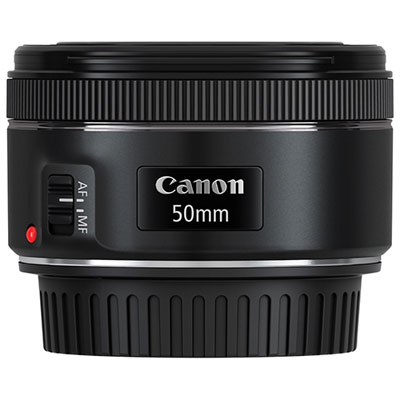 Your price for this item is $169.99
 -
 Your price for this item is $329.99
 -
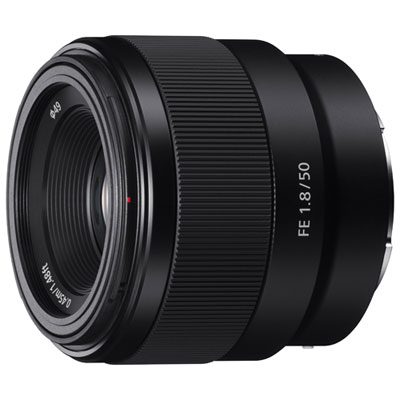 Your price for this item is $349.99
 -
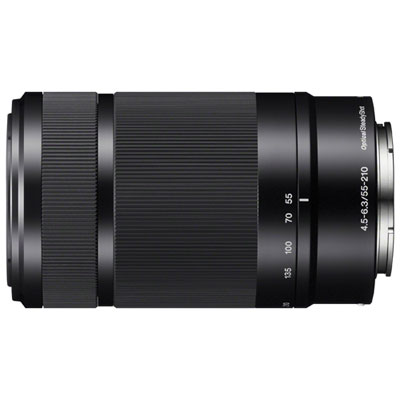 Your price for this item is $399.99
 -
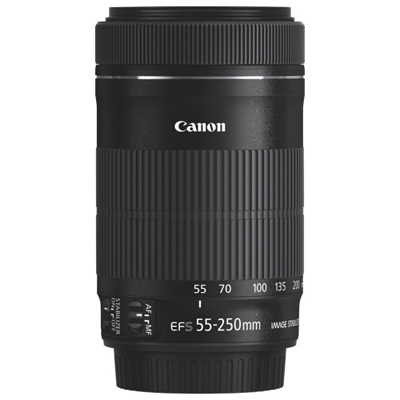 Your price for this item is $399.99
 -
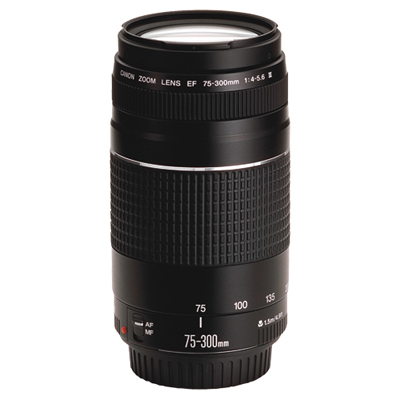 Your price for this item is $199.99
 -
 Your price for this item is $174.99
 -
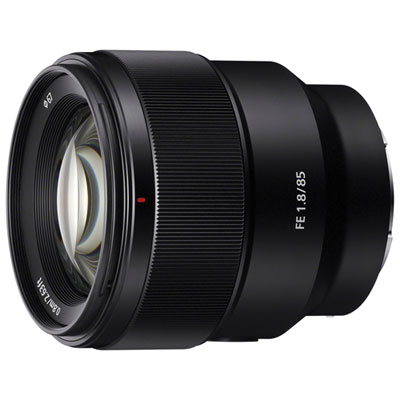 Your price for this item is $749.99
Discover more categories related to 24mm Lenses
Top Collections:
Pokemon Centers, Kindle Devices, Best Budget Office Chairs, Apple iPhones 16, Canon G7X Cameras, iPhone 15 Apple, Alarm Clock, Refurbished Apple Laptops, Flip Phones, Best Laptops for Writers
Some products may be subject to Environmental Handling Fees
(EHF) depending on your province.
Learn more about EHFs.